
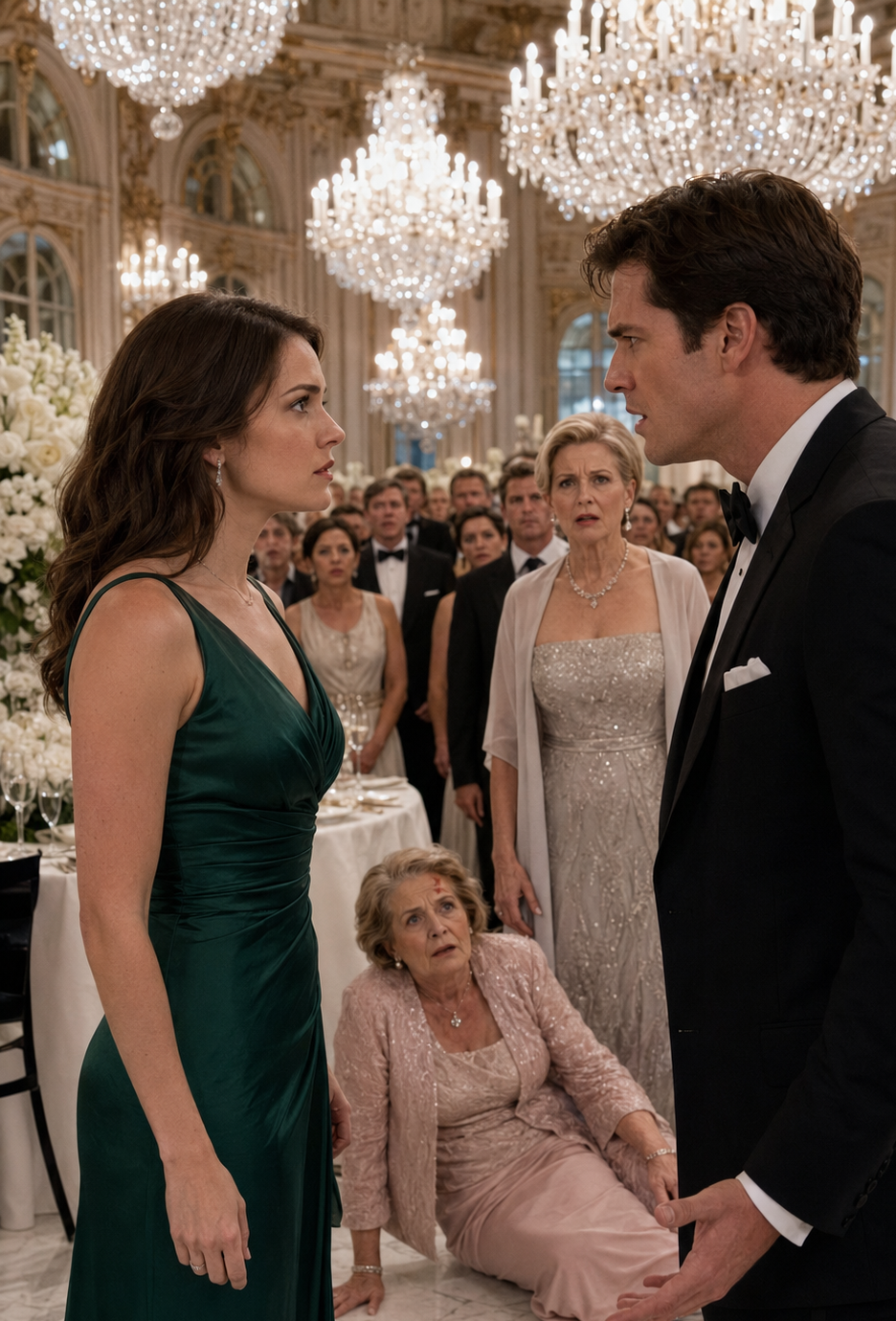
Not My Wife’s Style — Until the Keys Were No Longer Mine to Give
Four years of my life went into that barn.
My son looked at it once and said, “It’s not my wife’s style.” I didn’t argue.
Six weeks later, I sold it for $1.4 million.
When he found out the sale was final, he called in a panic and told me to undo it — but the new owners already had the keys, and there was something about that money he never understood.
My name is Martha, and at sixty-four, I thought I understood the difference between giving someone a gift and giving away too much of myself.
The house had begun as an abandoned dairy barn behind my farmhouse in upstate New York.
My late husband, Arthur, used it for tools and old furniture, but after he passed, the silence in our home became difficult to carry.
I needed a project.
My son David and his wife, Chloe, lived in a cramped city apartment with my grandson, Leo.
They complained constantly about rising rent, crowded parks, and never having enough room.
So I drew the plans myself.
I imagined Leo running across reclaimed oak floors.
I pictured Sunday dinners around a walnut kitchen island.
I designed an attic bedroom with a deep window seat facing the maple-covered ridge.
Every morning, I walked out there with a thermos of coffee and a binder under my arm.
I hired local contractors for the framing, plumbing, and electrical work, but I managed every decision.
Cherrywood cabineTS. Radiant heat beneath the bathroom floor.
Custom ironwork for the staircase.
Professional appliances.
I spent four years and a large part of my personal savings turning that weathered barn into a warm, beautiful home built to last for generations.
When the final coat of paint dried, I invited David, Chloe, and Leo for the weekend.
I placed a brass key inside a small wooden box Arthur had made years earlier.
That Saturday morning, David parked his leased SUV beside the farmhouse.
Chloe stepped carefully over the gravel in a designer coat and heels.
I led them toward the barn and pushed open the heavy double doors.
Sunlight filled the great room.
I waited for a gasp.
A smile.
A hug.
Instead, Chloe slowly looked around and crossed her arms.
“It’s very rustic, Martha.” She touched one of the cherry cabinets with the tip of her finger.
“Are the appliances supposed to be visible?”
“They’re professional-grade,” I said.
“Yes, but we prefer everything hidden.
More sleek and integrated.”
David shoved his hands into his pockeTS. “Mom, it’s impressive.
Really.
It’s just not Chloe’s style.”
Not Chloe’s style.
Four years of permits, construction delays, contractor meetings, and carefully chosen materials, dismissed in less than a minute.
Leo was the only one who looked excited.
He ran toward the staircase and stared up at the attic.
“Is that my room?”
Before I could answer, Chloe said, “We haven’t decided anything yet.”
Then she turned toward me with a polished smile.
“Honestly, what if you sold it?”
I thought I had misunderstood.
“Sold the house?”
“The barn and part of the land,” she said.
“A developer would probably pay a lot for this property.
You could give us the money for a down payment on a luxury condo closer to David’s office.”
David nodded.
“That might make more sense, Mom.
We could find something that actually fits our lifestyle.”
They were already spending the proceeds.
My land.
My savings.
My work.
In their minds, the house was not a gift to accept or decline.
It was an asset they were entitled to convert into whatever they preferred.
I looked at David and waited for him to notice my expression.
He did not.
“We don’t need to decide today,” he said, mistaking my silence for agreement.
They stayed less than an hour.
Chloe said the farm smell was giving her a headache.
David promised to send me condo listings.
Leo hugged me beside the driveway and asked whether he could sleep in the attic someday.
“You’ll always have a place with me,” I told him.
After their SUV disappeared down the gravel road, I returned to the barn alone.
The brass key was still inside the wooden box in my coat pocket.
I sat at the walnut island while afternoon light stretched across the oak floor.
For the first time, I stopped imagining the family I hoped David would become and looked clearly at the man standing in front of me that morning.
He had not asked what the project cost.
He had not thanked me.
He had not defended my work.
He had looked at my home and calculated what it could buy him instead.
That evening, he sent three condo listings.
The first had a rooftop lounge.
The second had a private gym.
The third cost more than I had spent converting the entire barn.
Chloe loves this one, he wrote.
We should act quickly.
I placed my phone facedown and called Beverly Hart, an old friend who had sold luxury properties throughout the county for twenty years.
“The barn is finished,” I said.
“I’ve been waiting to see it.”
“I want to list it.”
Beverly went quiet.
“I thought you were giving it to David.”
“Plans change.”
She arrived Tuesday morning wearing a red coat and carrying a leather notebook.
When I opened the barn doors, she stopped.
She walked through every room slowly, examining the iron staircase, the limestone fireplace, and the seamless transition into the kitchen.
Then she ran her hand along the walnut island.
“Martha, you didn’t renovate a barn.
You created something extraordinary.”
I felt something inside me settle.
Beverly spent an hour taking notes before sitting across from me.
“City buyers are looking for private retreats exactly like this.
With the acreage and these finishes, I wouldn’t list it below $1.4 million.”
“Can the barn and five acres be separated from the farmhouse deed?”
“Yes.
The survey and subdivision will take some work, but it can be done.”
“Start today.”
She studied me carefully.
“Are you sure?”
I looked at the unopened wooden box on the island.
“Yes.”
By Friday, the listing was live.
Professional photographs captured the warm beams, amber floors, and wide meadow views.
Cars began rolling down the driveway the next morning.
Couples from Manhattan toured the rooms.
A retired physician photographed the kitchen.
One woman stood beneath the attic window and whispered that it reminded her of her grandmother’s house.
No one called it too rustic.
Five days later, Beverly called.
“We have three offers.
One is full price, cash, with a thirty-day closing.”
“Who is the buyer?”
“A boutique hospitality group.
They want to use it for private executive retreaTS. They love every detail and want the furniture to stay.”
I looked toward the barn from my kitchen window.
“Accept it.”
Meanwhile, David kept sending condo links.
Did you contact a developer? What budget are we working with? Chloe found another unit we like.
I answered none of them.
I met the surveyor, signed the subdivision papers, reviewed the contract, and completed every step quietly.
My name was the only one on the deed.
The buyer’s representative thanked me for preserving the original architecture.
Then I placed the heavy iron keys in her hand.
By noon, the sale proceeds had cleared.
 Father Chooses To Keep Supporting His Mother-in-Law, But Refuses To Help His Pregnant Daughter
Part Two
Six weeks after the listing went live, my phone began ringing across the kitchen counter.
David called four times before I answered.
“Did you sell the barn?”
“Yes.”
“How much?”
“One point four million.”
The line went silent.
Then Chloe’s voice rose somewhere behind him.
David came back sounding breathless.
“Mom, undo it.
Call the buyer.
Tell them the sale was a mistake.”
“It wasn’t.”
“We were going to use that money for our condo.”
“You planned to use it.”
“That house was built for us.”
“Yes.”
“Then the money belongs to us too.”
I looked through the window.
Across the field, the new owners were carrying furniture through the double doors.
One of them held the same iron keys I had handed over that morning.
David kept talking, his confidence giving way to panic.
“Dad left that land to the family.
I have a right to my share.”
I reached for the property folder beside me and placed my hand on the original deed, the trust documents, and one final page David had never bothered to ask about.
Then I said, very calmly, “Listen carefully, because there is something about this property — and that $1.4 million — you never understood.”
The line went so quiet I could hear Leo’s cartoons playing somewhere in their apartment.
“When your father died,” I said, “everything he owned came to me outright.
Not to the family.
Not to you.
To me.
I chose, on my own, to spend my own money building a house on my own land and to offer it to you as a gift.
A gift, David.
Not a debt I owed you for being my son.”
“Mom, that’s not—”
“I’m not finished.” My voice didn’t rise.
I had spent six weeks rehearsing this in my head without knowing it.
“Your father set up a trust before he passed, one you’ve never asked to see, because you assumed you already knew what was in it.
That trust doesn’t distribute a single dollar to you or Chloe until I choose to release it, or until I’m gone.
I am neither incapacitated nor dead.
The only person with any legal claim on that land, that house, or that sale, was me.”
“So you’re punishing us.
For being honest about the design.”
“I built you an entire house, David.
You stood inside it for less than an hour and asked me to convert it into a down payment for a rooftop lounge.
That’s not honesty.
That’s an appraisal.”
He tried a different angle, softer, the one he used to use as a boy when he wanted something and pouting hadn’t worked.
“Leo’s going to be so disappointed.
He asked about his room every night for a week.”
That one landed.
I won’t pretend it didn’t.
But I had learned something in the six weeks since the sale closed — the difference between a wound someone else is using and a wound that’s actually mine to protect.
“Leo asked me himself, the day you left, if he’d always have a place with me.
I told him yes.
That’s still true.
It was true before the sale and it’s true now.
What isn’t true anymore is that the place has your name attached to it.”
“You could have talked to us first.”
“I tried.
I stood in that kitchen and waited for someone to say it was beautiful.
Nobody did.”
Chloe’s voice came through again, closer to the phone now, sharper.
“This is absurd.
Grandparents help their children.
That’s what family does.”
“I did help,” I said.
“For four years.
I helped by building something with my own hands and my own money, for free, expecting nothing back but a place at the table on Sundays.
You’re the one who decided help meant liquidating it into a currency you preferred.”
There was a long pause.
I heard David exhale, the particular sound he used to make as a teenager right before he asked to borrow the car and already knew the answer was no.
“So that’s it,” he said.
“It’s just gone.”
“It’s sold,” I said.
“It’s not gone.
It’s standing exactly where I built it, and someone is finally living in it who noticed the ironwork on the staircase before they noticed what it cost.”
I hung up before he could answer.
It was the first time in years I had ended a call with my son instead of the other way around.
The weeks that followed were quieter than I expected grief to be — because that’s what it was, in its own strange shape.
Not grief for a house.
Grief for the version of my son I had built alongside it, room by room, without ever checking whether he actually existed.
I kept the farmhouse.
I kept the coffee thermos and the binder, though there was nothing left to plan.
I drove past the barn some mornings on my way into town, slowing just enough to see new curtains in the attic window, a different truck in the gravel turnout, smoke rising steady from the limestone chimney I had chosen myself.
It didn’t hurt the way I thought it would.
It felt more like watching a photograph you’d taken finally hang on someone else’s wall — the print still yours in every way that mattered, the frame no longer your business.
David texted twice more that first month.
Both times about logistics — could I forward the original architectural drawings, did I still have the receipts for the appliances, in case they wanted “something comparable” for their own place eventually.
I sent the drawings.
I did not send anything that would have felt like an apology, because I hadn’t done anything that required one.
Chloe did not text at all.
It was Leo who called, three weeks after the sale, using David’s phone with the particular seriousness of a seven-year-old handling something important.
“Grandma, is the barn still there?”
“It’s still there, sweetheart.
Someone else lives in it now.”
“Did they take my room?”
I sat down at the kitchen table before I answered that one.
“They have their own things in it now.
But you know what? I still have that little window seat drawn out on my old paper, the one looking at the ridge.
If you ever want, we could build a smaller version of it right here at Grandma’s house.
Just for you.”
He was quiet for a second, thinking it over with the gravity only children bring to architecture.
“Would it have a reading light?”
“It would have exactly the reading light you want.”
“Okay,” he said, satisfied, and then asked to talk about something else entirely, the way children do when the important business has been settled and there’s a video game to discuss.
That was the moment I understood what I had actually protected.
Not a barn.
Not $1.4 million.
The idea that love could still be offered honestly in this family, without an invoice attached, as long as it was offered to the right person.
Six months later, I built the window seat.
Not in the farmhouse — I didn’t want Leo growing up thinking every room built for him had to replace the one that came before it.
Instead, I converted the old sewing room on the ground floor, the one with the low afternoon light and the view of the maple line, into something small and specific and entirely his.
A window seat.
A shelf just his height.
A reading lamp with a switch he could reach.
I didn’t tell David I was doing it.
I didn’t need his approval for this one, and for the first time in my life, that felt less like a wound and more like a fact.
David and I still speak.
Not often, and not the way we used to, but the calls have changed shape.
He asked, a few months in, carefully, almost like he was testing whether the ground would hold his weight, whether I would ever consider helping with a down payment “the normal way — like, actually gifting it, not building something first.”
I told him the truth.
“I’ll help you the way I choose to help you, David, when I choose to, and it will never again be an amount you get to negotiate for in my own kitchen.”
He didn’t like that answer.
But he also didn’t hang up.
And for the first time since he was a boy who used to run out to the barn with me on Saturday mornings, before Chloe, before condos, before he learned to look at things and calculate what they were worth instead of what they meant — he said something close to sorry.
“I should have looked at it longer,” he said.
“Before I said anything.”
It wasn’t everything.
It wasn’t the four years back, or the thank-you I never got standing in that great room with the sunlight pouring across the oak floor.
But it was true, and it was his, and it was the first honest thing he’d said to me since the day the doors opened.
I keep the wooden box on my kitchen windowsill now, the one Arthur made, the one that once held a brass key meant for a house that was never really David’s to keep.
It’s empty these days.
I like it that way.
Not every box needs to hold something to prove it mattered.
Some evenings I still drive past the old barn, slower than the road requires, and watch the light come on in windows I chose the size of myself.
It isn’t mine anymore.
But it was, once, entirely — every board, every hinge, every hour — and no one can take that part away, no matter what they decide it’s worth.
That’s the part David never understood, and the part I finally learned for myself, sixty-four years into a life spent giving too much away: a gift only stays a gift as long as you’re free to take it back.
The moment someone starts treating your love like an asset on their balance sheet, you’re not being generous anymore.
You’re being spent.
I don’t plan to be spent again.