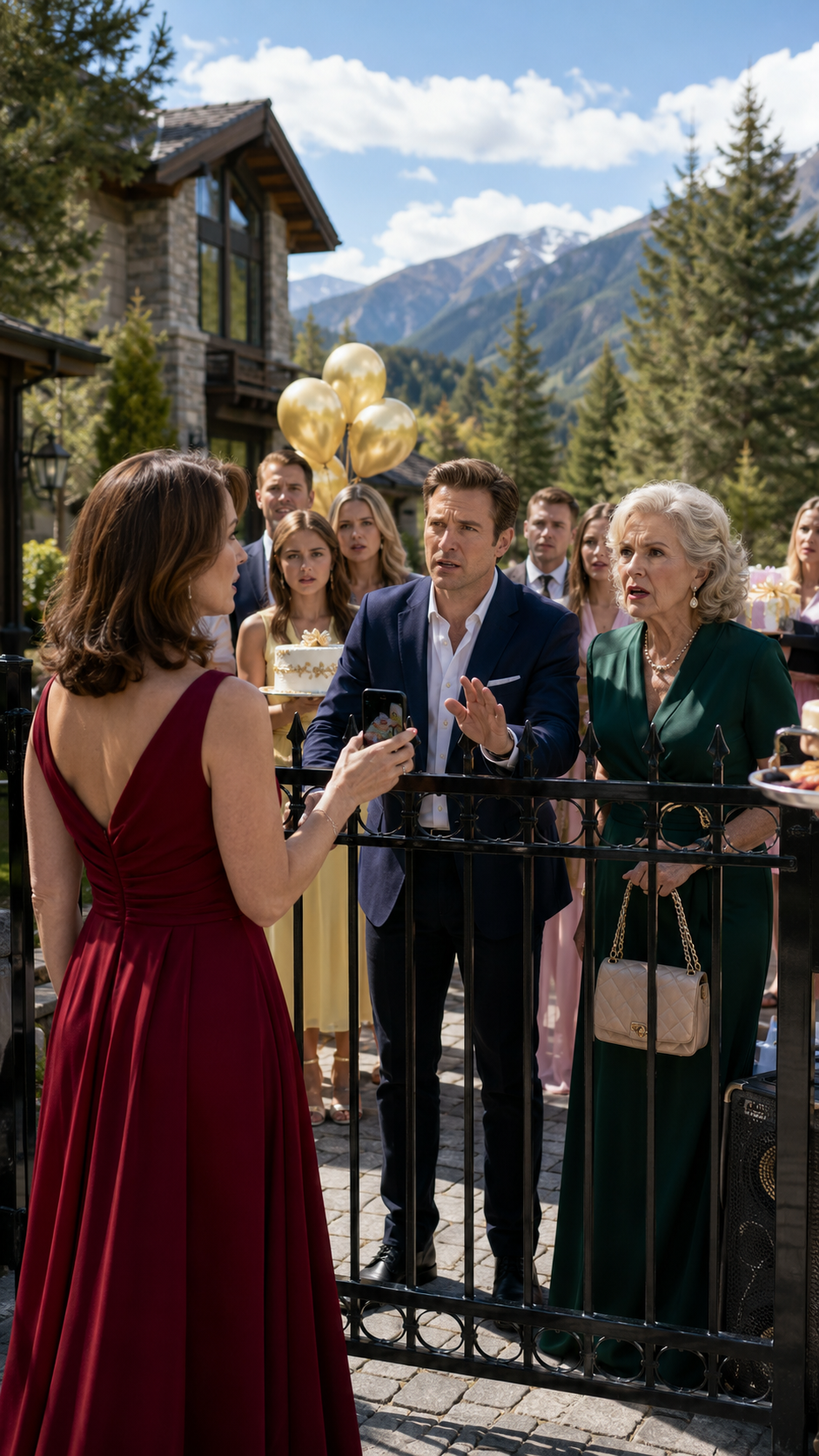
From outside my house, my mother-in-law shouted, “Why is the gate closed?”… A minute later, my husband called me begging me to open it, and I told him, “Put me on speakerphone,” because his whole family was going to find out the truth.
“No one is going to enter my house today because I already know exactly what you were planning to do to me.” I spoke those words without raising my voice while sitting in front of a warm cup of coffee at a small bistro in the town square, watching my furious mother in law on … Read more
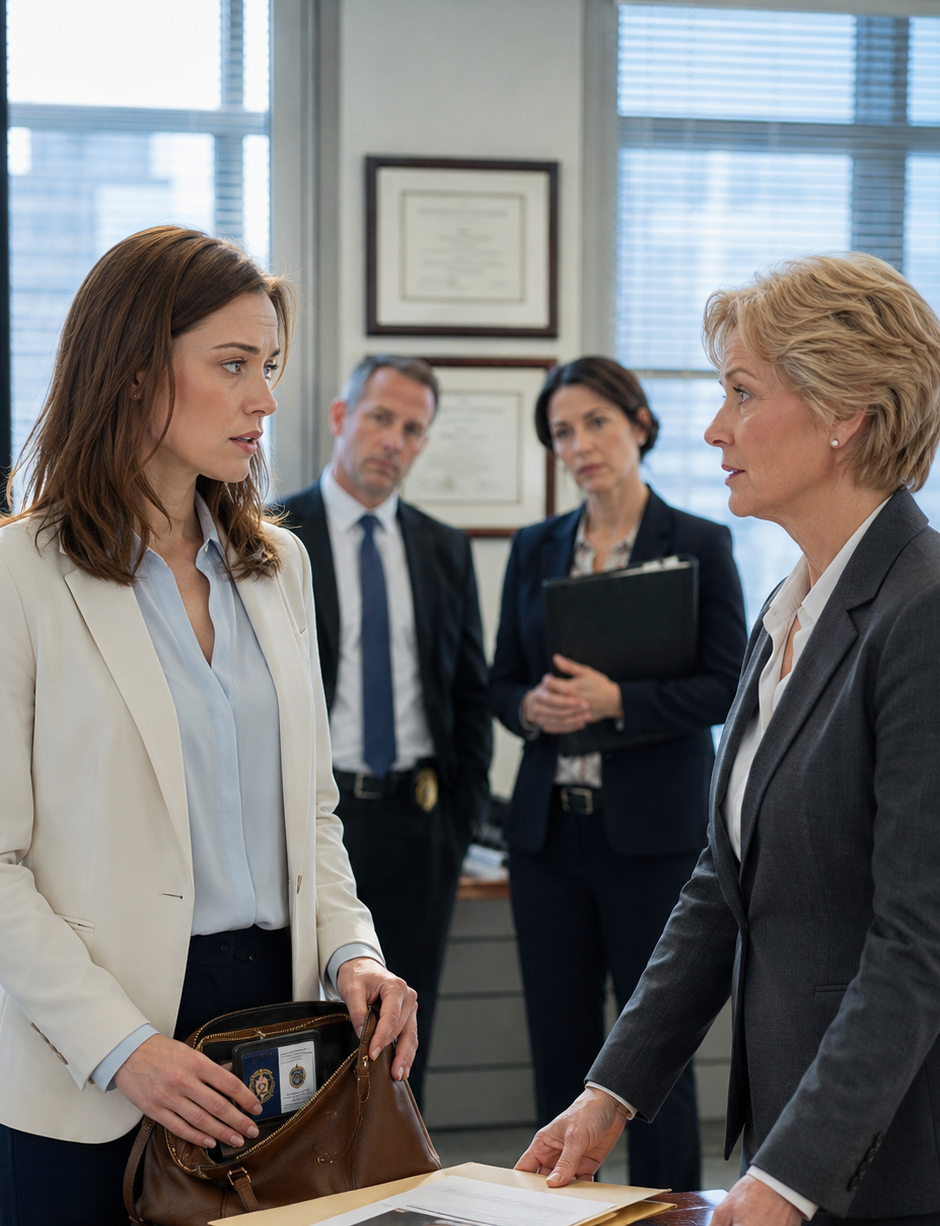
The morning after the wedding, we were packing our bags to go to the beach. Suddenly, the marriage registration office called: “We’ve checked your husband’s documents and found something unusual. Come immediately and don’t say a word to your husband or mother-in-law!”.

The marriage office called twelve hours after I said “I do” and told me my husband might not exist. Then the woman on the line lowered her voice and said, “Come alone, Mrs. Bennett—and do not warn your husband or his mother.” Across our hotel suite, Adrian was packing white shirts into a leather suitcase … Read more

I Returned From a Business Trip to Find a Wedding Being Held in the Garden of My Own House. My Mother-in-Law Slammed the Gate in My Face and Said, “Today My Son Is Marrying a Real Woman.” I Didn’t Argue. I Took Out My Phone, Called My Lawyer, and Ten Minutes Later, More Than a Hundred Guests Learned Who Really Owned Everything.

PART 2 Jenna lived in a small third-floor apartment in Wicker Park above a bakery that made cinnamon rolls every morning at six. It had one bedroom, thin walls, a noisy radiator, and a kitchen table that wobbled if you leaned on it wrong. It was the safest place I had been in three years. … Read more

My Mother-in-Law Dumped the Dinner I Spent Two Hours Cooking, and My Husband Told Me to “Stop the Drama”—So I Said, “Tomorrow, I Won’t Cook.” A Month Later…

PART 2 At six-thirty the next morning, Margaret entered the kitchen and froze. The stove was cold. The coffeemaker was empty. There was no bacon sizzling, no oatmeal warming, and no lunch container waiting for Jason. Emily stood by the front door in a navy coat, adjusting the strap of her bag. “What is this?” … Read more

He Took His Mistress to the Diamond Gala and Left His Wife Washing Dishes—Then the Host Announced the Trillion-Dollar Heiress Funding His Company, and She Walked Down.

PART 2 — THE DIAMOND GALA Adrian Mercer entered the Grand Halcyon Hotel believing the night had been designed to celebrate him. The hotel stood above Michigan Avenue like a palace carved from gold and glass. White spotlights crossed the winter sky. Reporters waited behind velvet ropes while luxury cars delivered politicians, celebrities, industrialists, and … Read more

My Husband Left for Vacation With His Mother After Saying, “You’re Hallucinating Again,” Even as Our Newborn’s Skin Turned Blue; I Survived the Hospital, Kept Every Receipt, Text Message, and Timeline, and When They Came Home Laughing, They Learned That Their Trip Carried a Price They Could Never Pay.

Part 1: The Cold Front “If your baby is turning blue, just bundle him up tighter and stop playing the victim.” My mother-in-law, Theresa, said the words with a dismissive wave as she slid her passport into her designer carry-on. My son was only three days old. It had been exactly seventy-two hours since I … Read more

I discovered my husband was sleeping with his own stepmother because she sent me a photo of them in my bed. Three days later, I printed that picture six feet tall and placed it in the center of our living room before his entire family arrived for dinner. When he froze at the doorway, I smiled and said, “Welcome home. Tonight, everyone gets to see what kind of family you really are.”

Chapter 1: The Anatomy of a Morning The digital clock on my nightstand shifted to 6:13 AM on a Wednesday when the illusion of my life finally fractured. The morning was aggressively ordinary. Downstairs, the espresso machine was humming its familiar, comforting tune. My mug of dark roast was still emitting thin ribbons of steam, … Read more

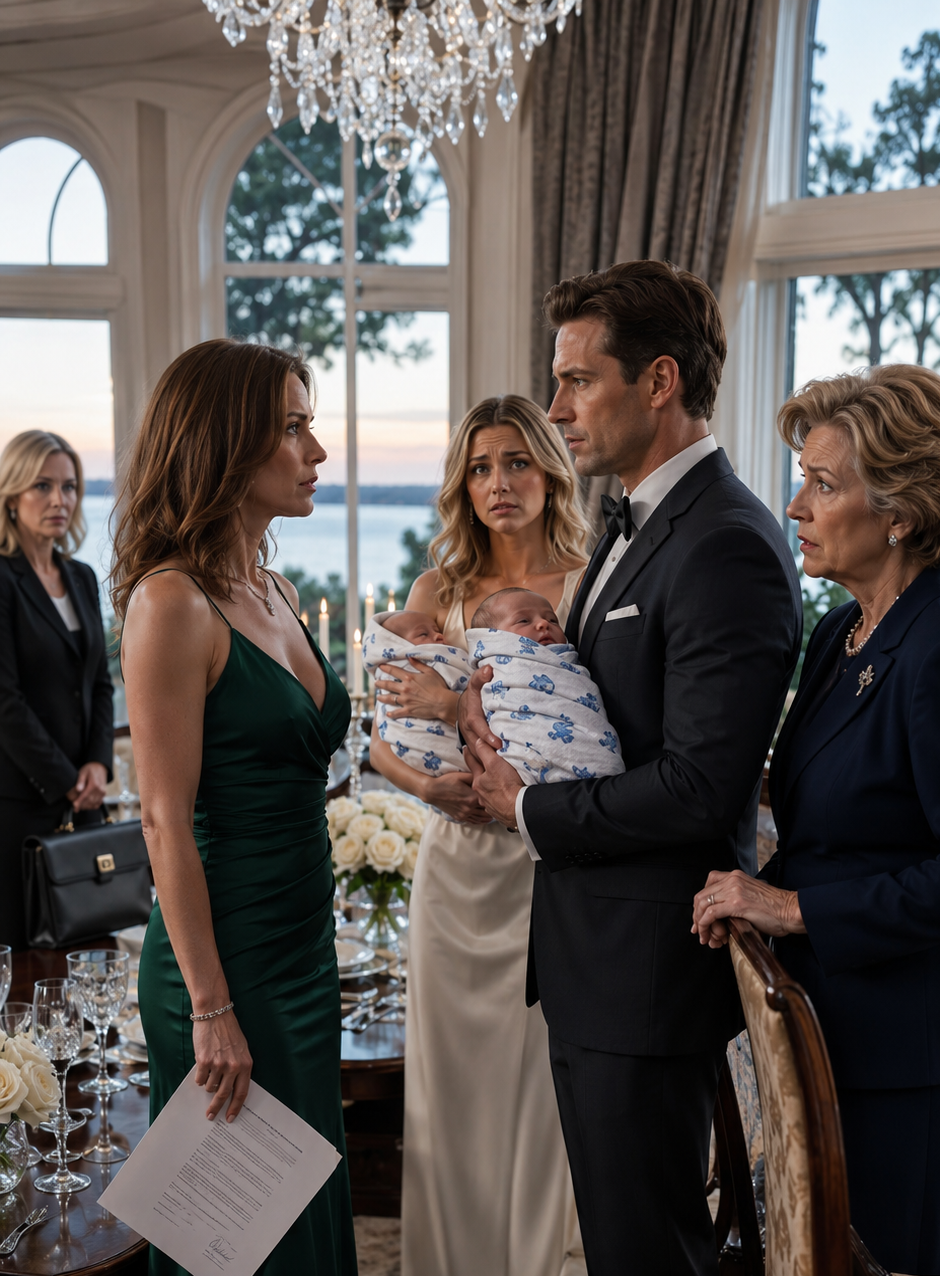
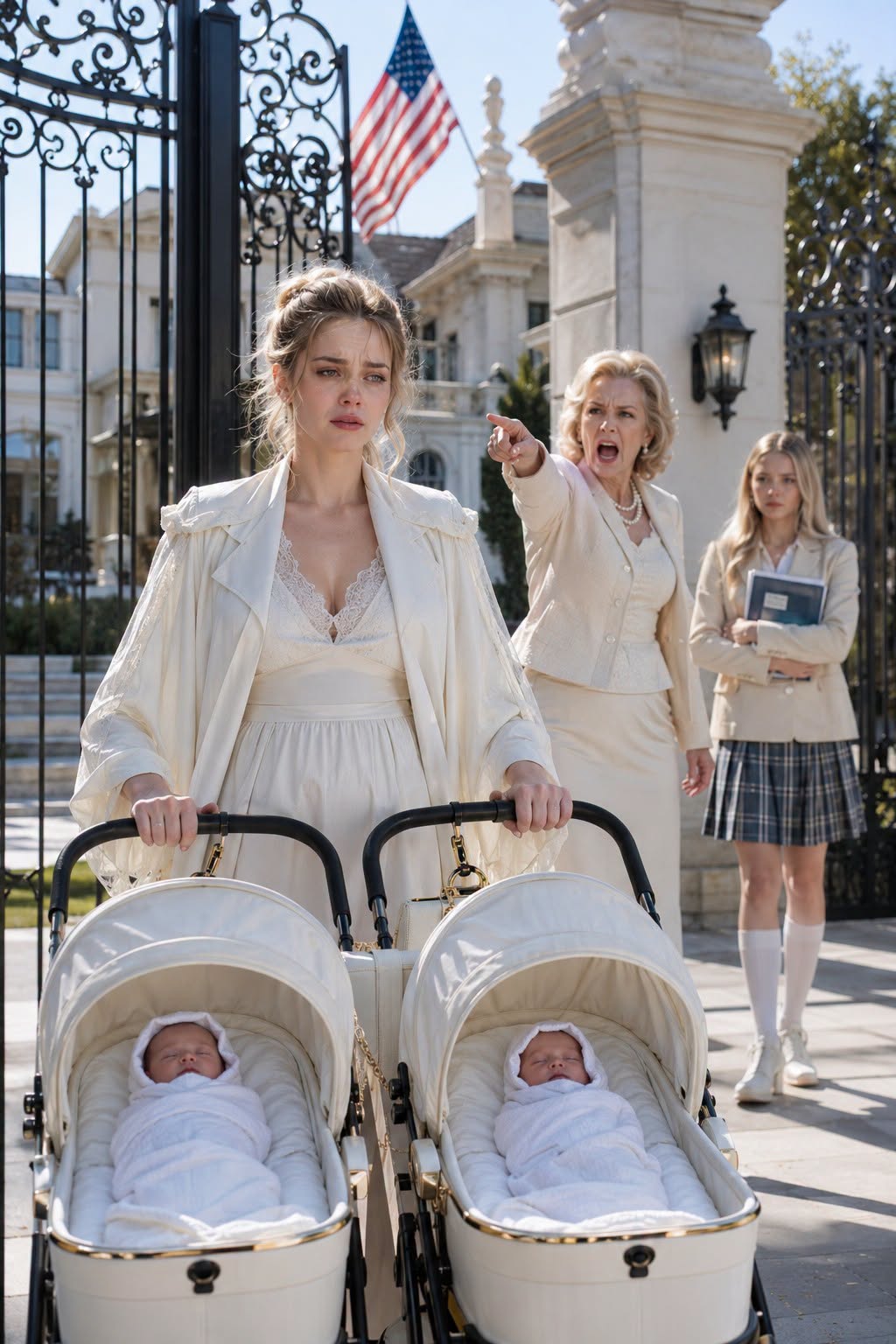
My husband introduced another woman’s twins as his own. Then he handed me divorce papers.

Part 1 – The Anniversary Dinner For eight years, everyone in my husband’s family had treated our childlessness as a private failure that somehow belonged only to me. Every holiday carried another question, every birthday ended with another recommendation, and every medical appointment became evidence that I had failed to provide the future my husband … Read more

My mother looked straight at me and said, “We’re not paying for this wedding.” My sister Grace smiled at her phone and added, “Better luck next time,” as thouThat night, Grace texted me and warned me not to be dramatic because “it wasn’t like anyone died.” She added that the cancellation might finally give me time to think clearly, proving she knew far more than she had admitted. Ethan placed his hand over mine and asked the only question that mattered: “What do you want to do?” For the first time, no one was asking what we could afford, what my mother would allow, or what the family would think. “I want to marry you,” I told him. Ethan nodded and said, “Then we start there.” I opened the cancellation email Sarah had forwarded, expecting another cold business message from my mother. Instead, I found the sentence that showed me exactly how far she had gone. My mother had written, “Olivia has reconsidered the appropriateness of the event and agrees that cancellation is best for everyone involved.” She instructed the venue not to contact me because the situation was supposedly too emotional for me to handle. Then, beneath her signature, she added one final line. “The bride understands.” I stared at those words and realized my mother had not only canceled my wedding—she had spoken in my name. She had told strangers what I believed, what I felt, and what I had agreed to without ever asking me. For most of my life, my family had mistaken obedience for understanding. This time, I was going to show them the difference. The next morning, I called my mother and told her I knew she had canceled the vendors before our meeting. She did not apologize or even deny it; she said she had handled an “unpleasant necessity” because I was too emotional to make a sensible decision. When I reminded her that she had falsely claimed I agreed, she answered, “You would have, eventually.” In that moment, I understood she truly believed being my mother gave her the right to replace my choices with her own. She blamed Ethan, saying he could never provide the life I had been raised to expect. I looked around our small apartment—the crooked dish towel, the basil plants, his coffee cup beside the sink—and told her this was the life I had chosen. Her voice turned cold, and she warned that if I continued with the wedding, I would do it without the family’s support. I told her I had understood that the moment she erased my voice from my own wedding. Ethan and I spent the day trying to save Ivy Oaks, moving money between accounts and calculating how much debt we could survive. By late afternoon, we could barely cover the venue balance, but nothing else—not the food, chairs, flowers, or transportation. Ethan said we could still make it work, but I knew he was offering to begin our marriage under crushing debt because he hated seeing me lose something I loved. I called Sarah and released the date. The next morning, June Bell, the owner of the bakery beneath our apartment, saw our faces and demanded to know what had happened. After hearing how my mother had canceled everything, June led us through the kitchen to the old brick courtyard behind the bakery. Ivy climbed the walls, a magnolia tree leaned over one corner, and broken string lights hung above mismatched café tables. “How many people do you actually need?” she asked. The original guest list had included one hundred twenty people, many of them my parents’ friends, business associates, and country-club acquaintances. But when I thought about the people Ethan and I truly loved, the number became much smaller. June told us the courtyard could legally hold fifty-two guests and offered the space without charging us rent. She would make the cake, her staff would prepare dinner, and our friends could help transform the courtyard. For the first time since my mother’s announcement, I felt possibility instead of loss. Our friends found borrowed chairs, glass jars for candles, simple flowers, and a retired judge willing to perform the ceremony. Nothing came with conditions, and no one reminded us what we owed them. Every offer felt like love instead of leverage. Then we faced the guest list. Ethan’s parents, June, our closest friends, Aunt Rebecca, and my cousin Rachel were easy choices because they had supported us without asking us to become different people. My parents’ names were harder, even after everything they had done. Grace’s name was hardest of all because some part of me still believed sisters were supposed to remain sisters no matter how deeply they hurt each other. I remembered her smile and the words “Better luck next time.” Then I drew a line through all three names. We sent a brief message saying the wedding would continue on the original date in a much smaller venue, funded entirely by us. My father replied that he was glad we had found a solution, Grace sent a heart emoji, and my mother said nothing. For two days, there was complete silence. Then Aunt Rebecca called me and did not bother with a greeting. Her voice was tense when she asked, “Olivia, why did your mother tell everyone Ethan canceled the wedding?” I sat down slowly, because I suddenly realized canceling the vendors had only been the beginning. “She told people what?” I said it twice, like repeating the sentence might change what was inside it. “She’s telling everyone Ethan got cold feet,” Rebecca said. “That he backed out three weeks before the wedding and you’re devastated. She’s telling people not to bring it up around you because you’re ‘still processing.'” Rebecca’s voice cracked on the last word, not from sadness but from disgust. “Marilyn called me crying because she thought you might need someone to talk to. I didn’t know what to say.” I looked across the kitchen at Ethan, who had gone very still, a dish towel forgotten in his hand. He was the gentlest man I had ever known, the kind of man who remembered his students’ birthdays and kept protein bars in his desk for kids who came to school hungry. My mother had taken the two things that belonged only to us—our wedding and our story—and rewritten both to protect herself. “I have to go,” I told Rebecca, and hung up before she could hear my voice break. Ethan set the towel down. “How bad?” “She’s telling everyone you left me.” I said it flatly, because if I let the feeling in, I wasn’t sure I would be able to stand up again. “Not that she pulled the money. Not that she canceled our venue and forged an email in my name. That you got scared and ran.” Something moved across Ethan’s face that I had never seen there before—not anger exactly, but a kind of quiet recalibration, like a man realizing the ground he’d been standing on wasn’t as solid as he’d believed. “Why would she do that?” “Because if people believe you left me, then she’s not the villain. She’s the mother comforting her broken daughter. It’s the opposite of what actually happened, and it makes her the hero of it.” I sat down across from him, my hands flat on the table to keep them from shaking. “And if enough people believe it, eventually I might start to wonder if it’s true.” That was the part that frightened me most—not the lie itself, but the shape of it. My mother had spent twenty-nine years training me to doubt my own perception of events, to accept her version over my memory of what had actually happened. You’re too emotional to see clearly. You always exaggerate. You’ll thank me one day. The cancellation email had already tried to speak in my voice. Now she was trying to write the story of my own heartbreak using someone else’s name for the villain. Ethan reached across the table and put his hand over mine, the way he had done the night everything fell apart. “Then we tell people the truth.” “She’ll say I’m lying to protect you.” “Then we show them.” His voice was calm, but there was an edge underneath it I rarely heard. “The email exists, Liv. The dates exist. Sarah can confirm when the cancellation requests came in. This isn’t a story where both sides get to be true. There’s what happened, and there’s what she’s saying happened, and only one of those is real.” I thought of the binder, still sitting on our dresser, its pale blue cover soft with handling. I thought of every dinner where I had let a comment slide because arguing with my mother cost more than it was worth. I thought of Grace’s texts, cheerful and cruel in the same breath, and my father’s silence, which had never once, in twenty-nine years, become a sentence in my defense. “Okay,” I said. “Then let’s show them.” We didn’t post anything online. My mother would have loved that—a public fight she could frame as her unstable daughter airing family business for sympathy. Instead, I forwarded the cancellation email, along with the timestamped messages from each vendor confirming when the cancellations had come through, to exactly three people: Aunt Rebecca, my father, and, after a long debate at the kitchen table, my mother herself. I wrote one line above the forwarded thread. This is what actually happened. I am not devastated because Ethan left me. I am getting married in seventeen days, in a place my mother has never seen, surrounded by people who never once asked me to become smaller to be loved. I hope someday you will be one of them again. Right now, I need you to stop speaking for me. My father called within the hour. I almost didn’t answer, because in twenty-nine years he had never once called me first about anything that mattered. His voice, when I picked up, sounded older than I remembered. “I saw the email,” he said. “The real one. Rebecca showed me the dates.” “Did you know?” I asked. “Before the meeting. Did you know she’d already canceled everything?” The silence lasted long enough that I had my answer before he spoke. “She told me the wedding was moving in a direction she couldn’t support,” he said finally. “She didn’t tell me she’d already… I didn’t know about the email, Olivia. The one with your name on it. I want you to believe that.” “I don’t know what I believe anymore,” I said, and it was the most honest thing I’d said to my father in years. “I know you watched her tell me we weren’t paying, and you looked at the floor. I know you’ve been looking at the floor my whole life whenever she needed you to.” He didn’t defend himself. That, more than anything, told me something in him had actually cracked open. “I know,” he said quietly. “I’ve been telling myself that keeping the peace was the same thing as keeping you safe. I don’t think that’s true anymore.” It wasn’t an apology, not really—not the kind that undoes twenty-nine years of a man choosing comfort over his daughter. But it was the first true thing he had offered me instead of silence, and I let myself hold onto it, carefully, the way you’d hold something you weren’t sure was safe to trust yet. My mother did not call. Instead, three days later, she appeared at Bell Street Bakery, standing at the bottom of the stairs to our apartment like she expected to be invited up. I went down instead. I was not ready to let her back into the one space that was entirely ours. “You sent that email to your father,” she said, without greeting. “You made me look like a liar in front of my own husband.” “You are a liar,” I said. “The email didn’t make you one. It just stopped you from being the only person who got to decide what was true.” Her jaw tightened, the same way it always did when I refused to perform the daughter she wanted. “I did what I thought was necessary. That boy was never going to give you the life you were raised for.” “You keep saying his name like it’s a diagnosis,” I said. “His name is Ethan. He remembers his students’ birthdays. He kept every fabric sample I ever showed him in a folder labeled ‘Liv’s Wedding’ even after you canceled everything, because he believed we’d still need it. You have never once asked me what I actually want. You’ve only ever told me what I should want, and then punished me for wanting something else.” For the first time in my life, my mother did not have an immediate answer. Something flickered behind her composure—not guilt exactly, but the sight of a woman realizing the script she’d been reciting for thirty years no longer had an audience willing to follow along. “You’ll regret this,” she said finally, but her voice had lost its certainty. “When it’s hard—and it will be hard, Olivia, marriages like this are always hard—you’ll remember that I tried to save you from it.” “Maybe,” I said. “But at least it’ll be my hard. Not yours, borrowed and blamed on someone who never did anything except love me exactly as I am.” She left without another word. I stood at the bottom of the stairs for a long time after her car pulled away, waiting to feel triumphant, or at least steady. Instead I felt hollowed out, the particular exhaustion of finally saying the true thing to someone who has spent your whole life training you not to. She came back once more, four days later, and that time she didn’t wait at the bottom of the stairs. She climbed them, knocked, and when I opened the door, I saw something in her face I had never once seen there before—not composure, not disappointment, but something closer to fear. “I’m not here to fight,” she said. “I want to tell you something, and then I’ll go.” I let her in, though every instinct told me not to. She stood in our small kitchen, looking at the basil plants on the windowsill, the crooked dish towel, the two mismatched mugs drying by the sink, and for a moment she looked almost young—like a woman standing in a life she recognized from somewhere far away. “My mother sold the wedding I wanted,” she said finally. “Not canceled it. Sold it. She needed the deposit money for my father’s business, and she told everyone I’d changed my mind, that I’d decided a small ceremony suited me better. I was twenty-two. I didn’t have a bakery owner willing to give me a courtyard. I didn’t have anyone willing to lie for me the way your father just lied for you.” Her mouth twisted on the word lied, like she couldn’t quite decide if it was an accusation or an apology. “I told myself for thirty years that it didn’t matter, because I built something better afterward. A house. A name people respected. Two daughters who would never have to stand where I stood.” “And instead you did to me exactly what she did to you,” I said quietly. “I know that,” she said, and it was the first time in my life I had heard her admit to being wrong about anything. “I’ve known it since the moment Sarah’s assistant confirmed the cancellation to you and I imagined your face. I told myself it was different, because I was doing it to protect you from a mistake, not to save money for myself. But control is control, Olivia. I dressed mine up as love, but underneath it, it was the same thing that was done to me. I just never had the courage to call it that until you refused to let me get away with it.” I wanted to feel triumphant, hearing her admit it. Instead I felt only tired, and something close to grief—for the mother she might have been, if someone had ever once given her the version of courage I’d been forced to find in a stolen wedding and a borrowed courtyard. “That doesn’t undo what you did,” I said. “You don’t get to explain your way back into my wedding four days before it happens.” “I know,” she said again. “I’m not asking to come. I’m asking you to understand that I’m not a monster, even though I did something monstrous. I don’t know how to be anything other than what my mother made me, and I am so sorry that meant becoming her instead of becoming someone better for you.” It was, I understood later, the closest thing to an apology I would ever get from her—not clean, not complete, wrapped so tightly in her own old wound that it barely resembled remorse at all. But it was true, and true was more than she had ever offered me before. I told her I needed time, that an explanation wasn’t the same as being forgiven, and that whatever came next between us would have to be built slowly, the way Ethan and I had built the wedding itself, out of small honest things instead of grand gestures. She nodded, and left quietly, and for the first time in my life, I watched my mother walk away without the last word. The seventeen days that followed were the strangest of my life—grief and preparation braided together so tightly I couldn’t always tell which one I was standing inside. Some mornings I woke up already crying, mourning the mother I had wanted instead of the one I had. Other mornings I woke up laughing, because June had taped a hand-drawn seating chart to the bakery’s flour-dusted counter, or because Ethan had come home with a box of mismatched glass jars from every thrift store in town, each one destined to hold a candle in the courtyard. Grace texted twice. The first time, she asked if I was “still doing this whole thing” in a tone that suggested she was hoping the answer was no. The second time, four days before the wedding, she called instead of texting, and when I answered, she was crying. “Mom told everyone you cut us off,” she said. “Aunt Rebecca said that’s not true. She said you asked me to come, and I said I’d think about it, and then I just… didn’t answer.” “I did ask you,” I said carefully. “I drew a line through your name because you never responded. Not because I decided you weren’t welcome.” “I don’t know how to be on your side without being against her,” Grace admitted, her voice small in a way I hadn’t heard since we were children. “She’s been telling me my whole life that loyalty means agreeing with her. I don’t actually know how to do it any other way.” It was, I realized, the first honest thing Grace had said to me in years—maybe the first time she had admitted that her cruelty wasn’t really about me at all, but about a lifetime of learning that our mother’s love came with conditions, and that meeting those conditions was the only kind of safety either of us had ever been offered. I understood, in that moment, exactly how alike our wounds were, even though we had built such different walls around them. “You don’t have to choose her forever,” I said. “But you do have to choose, Grace. Not for my wedding. For your life. I can’t keep waiting for you to decide I’m worth defending.” She was quiet for a long moment. “I don’t know if I can come,” she finally said. “Not because I don’t want to. Because if I do, she’ll never forgive me, and I don’t know if I’m brave enough yet to lose her the way you did.” I told her I understood, and I meant it, even though it hurt in a way I hadn’t expected. Some wounds don’t close because someone finally tells the truth. Some just start to make sense. The morning of the wedding, the sky over Bell Street was the pale, scrubbed blue of early autumn. June had strung the last of the lights across the courtyard the night before, and the magnolia tree, stubbornly out of season, had produced three white blossoms that no one could explain and everyone chose not to question. Fifty-two chairs, borrowed from six different households, stood in slightly mismatched rows facing an arch woven from ivy that Rachel and I had cut from the bakery’s back wall. I got ready in our tilted little apartment, in the same room where Ethan had held me the night everything fell apart. My dress was simpler than the one I’d once imagined—no cathedral train, no crystal buttons my mother had insisted on—but when I looked in the mirror, I recognized myself in a way I hadn’t in years. Aunt Rebecca did my hair. Rachel did my makeup badly and beautifully. The pale blue wedding binder sat open on the bed beside me, its pages worn soft, three years of plans that had somehow, impossibly, arrived at almost exactly the day they were always meant to. My father knocked on the door an hour before the ceremony. He was alone. “Your mother isn’t coming,” he said, before I could ask. “She told me if I walked you down the aisle, I shouldn’t bother coming home tonight.” His hands, usually so still, were trembling slightly. “I told her I’d rather sleep in my car than miss this.” I hadn’t let myself hope for him, not really—not after twenty-nine years of watching him choose the floor over my face. But there he stood, in his good gray suit, offering me the one thing he had never once offered before: himself, without her permission. “You don’t have to,” I said, even as my throat tightened. “I’ve already made peace with walking down alone.” “I know,” he said. “I’d like to walk you anyway. If you’ll let me.” I said yes. It wasn’t an undoing of every silence he’d ever chosen, and I didn’t pretend it was. But it was real, and it was his, and for the first time in my life, he had chosen me over the discomfort of choosing me. The ceremony itself passed in fragments, the way I imagine every wedding does for the people standing inside it. The retired judge’s steady voice. June crying openly in the front row, flour still dusting one sleeve. Ethan’s hands, not shaking at all, steady around mine the way they had been steady around everything since the night my mother took my wedding apart. My father’s arm under mine as we walked the short aisle between borrowed chairs, and the particular, unfamiliar warmth of him actually being there. When it came time for vows, Ethan set his notes aside and simply looked at me. “You once told me your mother said love was supposed to be earned through obedience,” he said. “I don’t know how to earn anything that way. All I know is you laughed for the first time in weeks the day we found this courtyard, and I decided right then I wanted to spend the rest of my life finding you reasons to laugh like that. Not because you owe me anything. Because I love you exactly as you are, and I intend to keep proving it, one ordinary Tuesday at a time, for as long as you’ll let me.” I had planned something eloquent for my own vows, three years of drafts distilled into careful sentences. Standing there, under the ivy arch, with the pale blue binder’s contents finally, actually happening around me, all of that fell away. “For most of my life,” I said instead, “I thought love that had to be earned was just what love was. You’re the first person who ever let me stop performing for it. I don’t have a speech that does that justice. I just have this—” I lifted our joined hands. “Understood. Not the word I used the day my mother tried to erase me. This time, I mean it the way it was always supposed to be meant. I understand exactly who you are, and exactly who I am with you, and I choose this. Not because anyone told me to. Because it’s true.” The judge pronounced us married as the last of the afternoon light came slanting gold through the magnolia leaves. Fifty-two people who had shown up without conditions applauded. My father cried, quietly, into a handkerchief he’d clearly carried for exactly that purpose. Somewhere in my bag, my phone held one unread message from Grace, sent an hour before the ceremony began: I’m not brave enough today. I’m working on it. I love you, even when I don’t know how to show it. The reception was smaller and stranger and more beautiful than anything my mother’s twelve-thousand-dollar venue could have produced. June’s staff carried out trays of food that smelled like the bakery itself—cinnamon and butter and something rosemary-bright underneath. The cake, three tiers of it, had been made in secret over four sleepless nights, and when June wheeled it out, I saw that she had piped a small, unmistakable detail along the base of the bottom tier: a row of tiny sugar roses, white, exactly like the ones that were supposed to have bloomed over us at Ivy Oaks. “I remembered you mentioning them,” June said, when she caught me looking. “Figured you should still get your roses. Just… different soil.” I found the photographer—one of Ethan’s former students, now grown and freelancing, who had offered his services as a wedding gift—setting up near the string lights, and I asked him for one particular shot before the light went entirely. He walked me to the corner where the magnolia leaned over the brick wall, its three impossible blossoms glowing faintly in the dusk, and took a single photograph of me alone, holding the worn pale blue binder against my chest, exactly the way I had held it the day I walked out of my mother’s house. Later, near the end of the night, my father found me by the dessert table, both of us slightly apart from the noise. “I want you to know,” he said, “that I’m not going home tonight. Not to stay, anyway. I think your mother and I need some time apart to figure out who I am when I’m not just agreeing with her.” I hadn’t expected that—hadn’t let myself imagine my father’s silence finally breaking into something like a decision. “That’s not because of me, is it?” “It’s because of me,” he said. “You just made it impossible to keep pretending I hadn’t noticed.” He looked out at the courtyard, at Ethan laughing with June near the cake table, at Rachel and Rebecca dancing badly to a song from the small speaker someone had hooked up near the ivy arch. “You built this out of nothing, Olivia. I watched your mother spend thirty thousand dollars trying to build something and it still would have been smaller than this.” I didn’t tell him it would be simple from here, because it wouldn’t. My mother would likely never fully forgive me for refusing her version of events. Grace would need more time than I could give her before she found the courage to choose differently. My father’s new honesty was fragile, untested by anything harder than a wedding toast, and I knew there would be days ahead when he slid back toward the floor out of old habit. Nothing about the last three weeks had ended the way fairy tales end. But when Ethan found me near the end of the night, pulling me gently into a slow dance under lights that flickered slightly with age, I understood something I hadn’t fully believed until that moment: I had not simply survived what my mother tried to do to me. I had built, out of borrowed chairs and thrift-store jars and a bakery owner’s unasked-for kindness, something my mother’s money could never have purchased—a version of my life that was entirely, unmistakably my own. Aunt Rebecca found me a little later, refilling her lemonade from a pitcher sweating condensation onto June’s borrowed tablecloth. “Your mother called me this afternoon,” she said carefully. “Before the ceremony. She didn’t ask me to talk you out of anything. She just wanted to know if the light out here was good. If it would look nice in photographs, she said, for whenever you were ready to show her.” Rebecca shrugged, half a smile tugging at her mouth. “I think that’s the closest thing to asking permission your mother has ever done in her life.” I didn’t know what to do with that—whether it was a small, crooked kind of hope or simply one more thing to set down carefully and examine later, when the ache of the day had settled. I decided it didn’t need deciding tonight. Some truths, I was learning, didn’t have to be resolved the moment they arrived. They could simply be held, gently, until you were ready to know what they meant. “Regrets?” Ethan asked, his hand warm against my back. I thought of the binder, its pages finally, quietly closed for good on the dresser upstairs. I thought of my mother’s porcelain teacup, lifted so calmly the day she told me the truth for the first time in my life, even if she hadn’t meant it as a gift. I thought of the word she had put in my mouth in that email, and the word I had chosen for myself under the ivy arch a few hours before. “None,” I said, and meant it completely. “I understand exactly what this is. And it’s mine.” We stayed under the lights until the candles in their mismatched jars burned down to nothing, and June began quietly stacking chairs, and the magnolia’s three stubborn blossoms finally let go and drifted, one at a time, onto the brick below—not an ending exactly, but proof that something could still bloom out of season, in soil no one had chosen for it, if you were patient enough, and brave enough, to let it. Near midnight, when almost everyone had gone and Ethan was helping June carry the last of the folding chairs back into the bakery, my phone lit up once more with a message from Grace. No heart emoji this time, no careful distance. Just a photograph—her own, taken years ago and never sent, of the two of us as children, sitting on the porch steps of our parents’ house, sharing a single popsicle before either of us had learned what our mother’s love would cost. Underneath it, she’d written only four words: I remember this, too. I saved the pale blue binder in a drawer that night, not because I was finished with it, but because for the first time since I’d opened it three years ago, I didn’t need to hold it against my chest to feel like the day inside it was real. It had already happened. It was mine, entirely, and no one—not my mother, not her carefully worded emails, not thirty years of a family mistaking obedience for love—would ever get to rewrite it again.

My mother looked straight at me and said, “We’re not paying for this wedding.” My sister Grace smiled at her phone and added, “Better luck next time,” as thou Sarah explained that the cancellation request had come from the email account listed as the primary contact. That account belonged to my mother. Worse, the request … Read more