
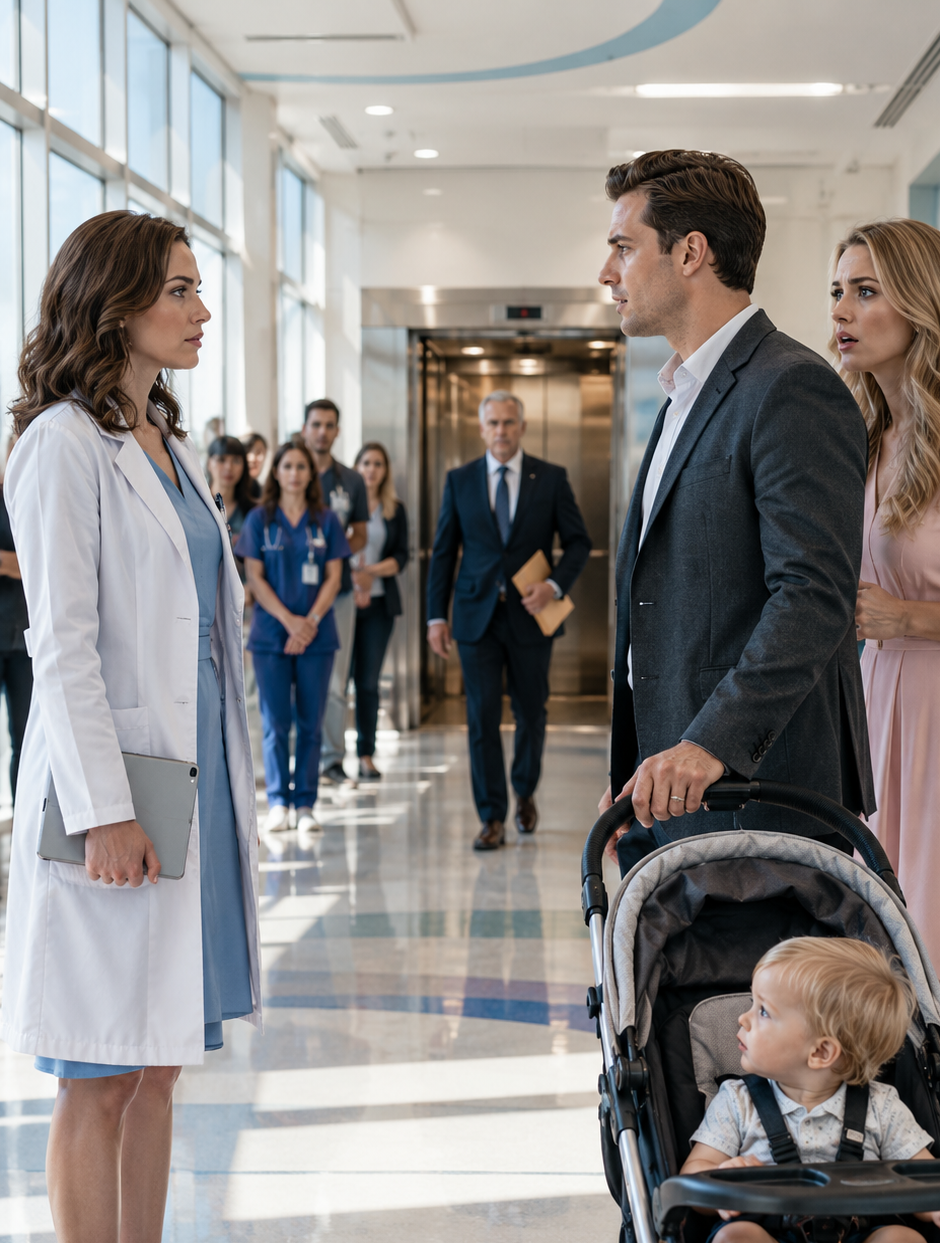
Kenneth Boyd had never been a dramatic man.
In all the years I had known him, first as the attorney who handled my divorce and later as the steady voice who helped me untangle the legal mess Connor left behind, Kenneth carried himself with quiet precision.
He did not raise his voice.
He did not rush through doors.
He did not make grand entrances.
But standing in the pediatric wing with a sealed folder beneath his arm, his presence changed the temperature of the hallway.
Connor noticed it too.
His smug expression shifted, not into fear exactly, but into annoyance—the way he looked whenever someone entered a room and refused to play the role he had assigned them.
“What is this?” Connor asked.
Kenneth stopped beside me, close enough that I could see the faint crease between his brows.
He looked tired.
Not physically tired.
Professionally tired.
Like he had spent the morning confirming something he wished had turned out differently.
“Kirsten,” he said quietly.
“I’m sorry to come here.”
“That sounds ominous.”
His gaze flicked toward Connor.
“It’s important.”
Melinda was frozen beside the stroller, both hands pressed against her coat as if she could hold herself together by force.
The broken bottle lay near her shoes in pieces, milk spreading across the polished hospital floor in a pale, widening pool.
One of the nurses stepped forward with paper towels, but Melinda didn’t move.
The baby in the stroller whimpered.
That sound cut through everything.
I crouched before anyone else could react, picking up the stuffed giraffe that had fallen near the wheel.
I checked it quickly for glass, then handed it back to the child with a soft smile.
“It’s okay,” I murmured.
The little boy blinked at me, his lashes damp, then clutched the giraffe against his chest.
For a moment, the hallway disappeared.
He had Connor’s coloring, but there was something about his eyes that made my stomach tighten.
Not because they were blue.
Lots of children had blue eyes.
Not because he was blond.
Genetics did strange things.
It was the way he looked at me.
Steady.
Curious.
Almost familiar.
I stood slowly.
Connor gave a short laugh, but it sounded thinner than before.
“You brought a lawyer to the hospital?”
“I didn’t bring him,” I said.
“He found me.”
“Right.
Convenient.”
Kenneth turned to him.
“Mr. Fleming, I wasn’t aware you would be here.”
“Then why are you staring at me like that?”
Kenneth didn’t answer immediately.
That was when I knew the folder wasn’t about some old tax document or a lingering piece of divorce paperwork.
Whatever was inside it had led him here.
To me.
To Connor.
To Melinda.
And to the child sitting between us, still clutching the giraffe.
Melinda finally bent down and began gathering the broken pieces of the bottle with shaking hands.
“Don’t,” I said quickly.
She flinched at my voice.
“There’s glass,” I added, softer.
“Let environmental services take care of it.”
Her eyes lifted to mine.
For one brief second, I saw the woman I used to know.
The woman who sat beside me in waiting rooms.
The woman who cried when my third round of treatment failed.
The woman who bought me soup and said, “One way or another, you’ll be a mother someday.”
Then she looked away.
A nurse guided the watching families down the hallway, gently restoring movement to the wing.
Conversations resumed in quieter tones.
A child laughed somewhere near the playroom.
A monitor beeped from behind a closed door.
The world kept going, as it always did, even when someone else’s life began to crack.
“Kirsten,” Kenneth said, “is there somewhere private we can talk?”
Connor scoffed.
“Whatever you’re about to say, you can say it right here.”
“No,” Kenneth replied.
“I don’t think I can.”
The calmness in his voice irritated Connor more than anger would have.
“This involves me, doesn’t it?”
Kenneth looked at me before answering.
“Possibly.”
That single word settled between us.
Possibly.
Melinda’s hand went to the stroller handle.
“Connor, we should go.”
“No.” He straightened.
“I’m not going anywhere until someone explains why my ex-wife’s lawyer is acting like he’s about to serve me papers in a hospital.”
Kenneth’s expression remained composed.
“I’m not here to serve you.”
“Then why are you here?”
“To speak with Dr. Sinclair.”
“My God,” Connor said, turning toward me.
“You still need men to rescue you, don’t you?”
I felt something inside me go still.
There had been a time when that sentence would have wounded me.
A time when I would have defended myself, explained myself, tried to prove I was strong enough, capable enough, reasonable enough.
A year away from him had taught me that certain people did not ask questions because they wanted answers.
They asked because they wanted control of the room.
So I did not answer him.
Instead, I looked at Kenneth.
“My office.”
We started walking.
Connor followed.
So did Melinda, pushing the stroller with one hand and gripping the handle so tightly her knuckles turned white.
“Kirsten,” she said quietly behind me.
It was the first time she had said my name.
I stopped.
The sound of it unsettled me more than Connor’s cruelty ever could have.
Because Connor had hurt me in ways I had learned to name.
Betrayal.
Manipulation.
Contempt.
But Melinda had occupied another place in my life.
She had been woven into my ordinary days.
Coffee after night shifTS. Birthday candles.
Long walks.
The kind of friendship where silence felt comfortable.
I turned.
She opened her mouth, then closed it again.
Her eyes slid to Connor, then to Kenneth, then back to me.
“Not here,” she whispered.
Connor’s face hardened.
“Melinda.”
She swallowed.
“I just mean the baby is tired.”
“The baby is fine.”
The child, as if to contradict him, began to cry.
Not loudly.
Not dramatically.
Just a tired, thin cry that made several staff members glance over by instinct.
I stepped toward the stroller.
“He may be overstimulated.”
Connor gave me a sharp look.
“Don’t diagnose my son.”
“I’m not diagnosing him,” I said.
“I’m noticing he’s a baby in a loud hallway.”
Melinda reached for the child and lifted him carefully into her arms.
He quieted against her shoulder, one small hand curling into the collar of her coat.
I watched her hold him.
There was tenderness there.
Real tenderness.
Not performance.
Not possession.
Whatever else Melinda had done, she loved that child.
That knowledge made everything harder.
My office was small, with a desk tucked beneath a window that overlooked the employee parking lot and a bookshelf crowded with pediatric journals, patient education binders, and a ceramic mug painted by a former patient.
A small couch sat against one wall for parents who cried during difficult conversations.
I had chosen the couch deliberately.
People deserved somewhere soft to fall apart.
Kenneth closed the door behind us.
Connor remained standing, arms crossed.
Melinda sat with the baby on her lap.
I took the chair behind my desk, not because I wanted distance, but because I needed something solid between my past and my present.
Kenneth did not sit.
He placed the folder on my desk.
“Kirsten, before I say anything else, I need to ask whether you received any recent correspondence from Northgate Fertility Center.”
The name hit me so hard I forgot to breathe.
Northgate.
For seven years, that place had been both hope and grief.
I knew the pattern of the carpet in the waiting room.
I knew which nurse hummed when she drew blood.
I knew the smell of the hand soap in the restroom where I had cried into paper towels after another negative test.
“No,” I said.
“Not recently.”
Connor rolled his eyes.
“Why are we talking about fertility clinics?”
Kenneth ignored him.
“You authorized me last year to request your complete medical and financial records related to the treatments during the marriage.”
“Yes.
For the divorce proceedings.”
“At the time, we received partial records.
Enough to establish marital expenditure.
But there were missing documenTS.”
I stared at the folder.
“What kind of missing documents?”
“Consent forms.
Storage records.
Transfer logs.”
Connor’s arms dropped slightly.
Melinda’s face turned toward the window.
Kenneth continued, each word carefully placed.
“Northgate Fertility Center closed six months ago after an internal audit.
Their remaining records were transferred to a third-party custodian.
Last week, I received notice that additional documents connected to your account had been located.”
My hands felt cold.
“And?”
Kenneth opened the folder.
Inside were copies of forms.
Medical records.
Dates.
Signatures.
Codes I recognized from another life.
“There appears to have been an embryo transfer associated with your account approximately twenty-two months ago.”
The room went silent.
I heard the air system hum above us.
The distant squeak of a cart wheel in the corridor.
The soft, damp sound of the baby breathing against Melinda’s coat.
Twenty-two months ago.
My mind began doing the math without permission.
Nine months of pregnancy.
One year of life.
A one-year-old child.
Connor spoke first.
“That’s impossible.”
Kenneth looked at him.
“That’s one of the concerns.”
“No,” Connor said sharply.
“That’s not a concern.
That’s nonsense.
Kirsten and I were already separated then.”
“Separated,” Kenneth said.
“Not divorced.”
Connor’s eyes narrowed.
“What are you implying?”
“I’m stating what the records show.”
Melinda pressed her lips together.
I could not look away from the papers.
An embryo transfer.
Associated with my account.
The words did not make sense together.
They floated in front of me like pieces of a language I used to understand.
“I never authorized that,” I said.
“I know,” Kenneth replied softly.
Connor laughed once.
“This is absurd.
Are you trying to say Melinda’s baby is hers?”
Kenneth’s expression did not change.
“No.”
Connor’s laugh died.
The baby shifted in Melinda’s arms and rubbed his cheek against her shoulder.
My chest tightened.
Melinda closed her eyes.
Kenneth turned one page around so I could read it.
There were two signatures on the authorization form.
One was Connor’s.
The other was mine.
Except it wasn’t.
I knew my own signature.
I had signed thousands of charts, prescriptions, discharge instructions, school forms for nieces and nephews, condolence cards, birthday cards.
My handwriting had a rhythm to it.
A slant.
A hesitation before the final stroke of my surname.
This signature looked like someone had studied mine and pressed too hard.
“That isn’t my signature,” I said.
Kenneth nodded.
“I suspected as much.”
Connor stepped forward.
“Let me see that.”
Kenneth did not hand it to him.
“Not yet.”
“Not yet?” Connor’s voice rose.
“You walk in here with accusations and won’t even show me the paperwork?”
“You can request copies through counsel.”
“I don’t need counsel.”
“Kirsten does,” Kenneth said.
Connor’s face flushed.
“This is a trap.”
I looked at him then.
Not at the man who had stood in the hallway trying to humiliate me.
Not at the husband who had turned my grief into evidence against me.
At the man whose name was on a document connected to an embryo transfer I never approved.
“Did you know?” I asked.
He stared at me.
“Know what?”
“Did you know someone used my signature?”
His eyes flickered.
Small.
Brief.
Enough.
“I don’t know what you’re talking about,” he said.
Melinda made a sound.
Not a word.
More like the beginning of one.
Connor snapped toward her.
“Don’t.”
The baby startled.
Melinda held him tighter.
“Please don’t raise your voice.”
“Then stop acting guilty.”
She looked down at the child.
Guilty.
The word landed heavily.
Kenneth reached into the folder again.
“There’s more.”
I almost asked him to stop.
For one fragile second, I wanted to return to five minutes earlier, when Connor’s cruelty was ordinary and survivable.
Before the past opened beneath my feet.
Before the child in Melinda’s arms became something other than a symbol of betrayal.
But medicine had taught me that not knowing did not protect anyone.
It only delayed the diagnosis.
“Tell me,” I said.
Kenneth drew out another document.
“The storage records indicate that two embryos remained after your final IVF cycle.
You were told none were viable.”
The room blurred.
I gripped the edge of the desk.
“No,” I whispered.
“I know this is difficult.”
“No.” My voice sounded unfamiliar.
“We were told the cycle failed.
We were told there was nothing left.”
Connor said nothing.
That was worse than denial.
Melinda began to cry silently, tears sliding down her face while the baby slept against her.
I looked at her.
“Melinda.”
Her shoulders trembled.
“Look at me.”
Slowly, she lifted her eyes.
“What happened?”
Connor stepped between us.
“She doesn’t have to answer that.”
“She absolutely does,” I said.
For the first time since I had known him, Connor seemed uncertain of the ground beneath him.
Melinda wiped her face with the back of her hand.
“I didn’t know at first.”
Connor turned on her.
“Stop talking.”
She flinched, but this time she did not go silent.
“I didn’t know,” she said again, louder, as if saying it once had broken something open.
“Not at first.”
My heart pounded so hard I felt it in my throat.
“What didn’t you know?”
She looked at the baby.
At his soft blond hair.
At his little fingers curled against her coat.
“About the embryo.”
The words emptied the room.
Connor muttered something under his breath and turned away.
I could not move.
There are moments when the body protects itself by slowing the world down.
I had seen it happen to parents receiving devastating news.
Their eyes fixed on one spot.
Their hands folded too neatly.
Their voices went calm in a way that frightened me more than screaming.
Now I understood that calm.
It was not strength.
It was shock wearing a white coat.
Kenneth placed a hand lightly on the back of the chair near me, not touching me, just close enough to remind me I was not alone.
I looked at Melinda.
“Are you saying that child came from one of my embryos?”
“I don’t know for certain,” she whispered.
“But you suspect it.”
She nodded.
The baby stirred and opened his eyes.
For a breath, he looked straight at me.
The room tilted.
Connor said, “This is insane.
Melinda carried him.
She gave birth to him.
He is our son.”
“No one is disputing that she gave birth to him,” Kenneth said.
“The question is whether the transfer was legally and ethically authorized.”
Connor pointed at him.
“You don’t get to walk in here and question my family.”
Kenneth’s voice remained even.
“Mr. Fleming, I strongly advise you to stop speaking without counsel.”
“I don’t take advice from you.”
“No,” Kenneth said.
“You rarely do.”
That made Connor pause.
I glanced at Kenneth.
“What does that mean?”
He hesitated.
“Kenneth.”
He sighed.
“During the divorce, Connor’s attorney submitted a financial declaration.
Some of the payments to Northgate were listed as routine medical expenses.
At the time, there was no reason to suspect anything beyond marital treatment cosTS.”
“But now?”
“Now those payments correspond with storage renewal, transfer preparation, and a procedure date.”
I looked back at Connor.
He was pale.
Not fainting pale.
Angry pale.
Cornered pale.
“You paid for it,” I said.
His mouth tightened.
“You paid them to use one of our embryos.”
He shook his head.
“You don’t know what you’re saying.”
“Then explain it.”
“I don’t owe you an explanation.”
“That’s usually what people say when they don’t have a decent one.”
His eyes sharpened.
“Careful, Kirsten.”
Kenneth stepped forward.
“Do not threaten my client.”
“I didn’t threaten anyone.”
The baby began fussing again, sensing the tension in the room.
Melinda stood abruptly.
“I need to walk him.”
“No,” Connor said.
She stared at him.
Something passed between them.
A history I did not know.
A fear I had seen in the hallway but had not understood.
Then Melinda did something I never expected.
She handed the baby to me.
Not fully.
Not suddenly.
Just held him out with both arms, her eyes pleading.
“Please,” she whispered.
“Just for a second.”
I froze.
Connor moved instantly.
“What are you doing?”
Melinda didn’t look at him.
“He calms when people are gentle.”
It was such a simple sentence.
And such a devastating one.
I should have refused.
Every reasonable part of me knew that.
This was not just a baby.
He was evidence.
He was heartbreak.
He was a living question I had not consented to ask.
But he reached for the sleeve of my lab coat.
And I took him.
He was warm and solid and heavier than grief.
His cheek rested against my shoulder with immediate trust, his small body relaxing as I shifted him the way years of pediatric practice had taught me.
One hand beneath him.
One hand secure along his back.
His hair smelled faintly of baby shampoo and milk.
I closed my eyes for one second.
Only one.
But in that second, seven years of locked doors opened inside me.
A nursery I never painted.
Names I never wrote down.
A future I had buried carefully so I could keep functioning.
The child sighed against me.
I opened my eyes and found Melinda watching me with an expression so broken I almost pitied her.
Almost.
“What’s his name?” I asked.
She swallowed.
“Elliot.”
Elliot.
The name struck softly, then deeply.
Connor and I had once made a list.
Late one night, after our second IVF cycle, when hope still felt reasonable.
We had lain in bed with my phone between us, arguing gently over names.
I had said Elliot.
Connor had wrinkled his nose and said it sounded like a child who would correct people’s grammar.
I loved it anyway.
I looked at Connor.
“You named him Elliot?”
He said nothing.
Melinda covered her mouth.
That told me everything.
The office door opened slightly, and my colleague Dr. Anika Rao peered in.
She took one look at the room and stopped.
“Kirsten?”
“I’m okay,” I said automatically.
She looked at the baby in my arms, then at Connor, then at Kenneth.
Anika had been my friend through the divorce, but unlike Melinda, she had never asked for details she wasn’t prepared to carry.
“You have the staff meeting in three minutes,” she said gently.
“I can cover for you.”
“Thank you.”
Her eyes softened.
“Take all the time you need.”
She closed the door.
For a moment, no one spoke.
Elliot’s breathing steadied against my shoulder.
Kenneth said, “Kirsten, legally, we need to be careful.
There will have to be confirmatory testing, record verification, and a formal review.”
Connor seized on that.
“Exactly.
You have nothing.”
“We have enough to investigate.”
“You have paperwork from a closed clinic and a hysterical woman looking for a reason to pretend my child belongs to her.”
The words should have made me angry.
Instead, they clarified something.
Connor was not defending Melinda.
He was not defending Elliot.
He was defending ownership.
His child.
His family.
His victory.
I looked at him over Elliot’s head.
“You really thought this would destroy me.”
He scoffed.
“Don’t flatter yourself.”
“You came to my workplace.
You introduced him loudly.
You wanted an audience.”
“You always think everything is about you.”
“No,” I said.
“I spent years thinking everything was my fault.
There’s a difference.”
Melinda closed her eyes again.
Connor’s jaw worked.
I turned to her.
“When did you find out?”
She hesitated.
“Melinda.”
Her voice came out small.
“After the first ultrasound.”
Connor turned away sharply.
“I’d gone to Northgate because Connor said he still had an account there,” she continued.
“He told me there were donor embryos.
He said everything was handled legally.
I asked questions, but he said the clinic had strict confidentiality rules and that the paperwork was complete.”
Kenneth listened carefully.
“Did you sign recipient consent forms?”
“Yes.”
“Do you have copies?”
“At home.”
Connor said, “This is private medical information.”
Kenneth looked at him.
“Not if it involves fraudulent consent.”
Melinda pressed her palms together.
“After the ultrasound, the nurse said something strange.
She called the embryo by a case code, and I recognized the initials.”
My breath caught.
“What initials?”
She looked at me.
“K.S.F.”
Kirsten Sinclair Fleming.
The name I had stopped using the day the divorce was final.
“I asked Connor,” she said.
“He told me I was imagining things.
He said clinics used old account numbers all the time.
Then I found a storage bill in his email.”
Connor snapped, “You went through my email?”
She looked at him with exhausted disbelief.
“I was pregnant and terrified.”
“With our son.”
“With a child I wasn’t sure I had the right to carry.”
The sentence broke something in me.
Not forgiveness.
Not sympathy.
Something more complicated.
Because she had still carried him.
She had still stayed with Connor.
She had still let me believe she had simply taken my husband and built a life from the wreckage of mine.
“Why didn’t you tell me?” I asked.
Her face crumpled.
“I wanted to.”
“But you didn’t.”
“I was scared.”
“Of me?”
She shook her head.
Connor laughed coldly.
“Here we go.”
Melinda’s voice grew stronger.
“Of him.”
The room fell still.
Connor stared at her.
“Be very careful.”
But Melinda was no longer looking at him.
“He said if I told you, I would lose Elliot,” she said to me.
“He said no court would let me keep a baby conceived through fraud.
He said they’d treat me like I stole him.”
I held Elliot closer without meaning to.
Melinda saw it, and fresh tears filled her eyes.
“I know what I did to you was wrong,” she said.
“I know there’s no excuse for the affair.
No excuse for lying.
But by the time I understood what he had done, Elliot was already real to me.
He was kicking.
He had hiccups.
He turned toward my voice.”
Her words trembled.
“And I loved him.”
I looked down at Elliot.
He had fallen asleep, his tiny mouth open slightly, his hand still gripping my coat.
Love had made a mess of us all.
Not the clean, noble kind people wrote poems about.
The desperate kind.
The selfish kind.
The kind that could make someone stay silent when they should have spoken.
Kenneth gently cleared his throat.
“There is another matter.”
I almost laughed, though there was no humor in me.
“Of course there is.”
He reached into the folder again, but this time his hesitation was obvious.
“What?”
“The records indicate two embryos were stored.”
I nodded slowly.
“You said that.”
“One appears to correspond with Elliot’s transfer.”
“One?”
Kenneth’s mouth tightened.
“The second embryo’s status is unclear.”
The words did not land immediately.
Then they did.
“Unclear how?”
“The transferred records show it was removed from storage eight months after the first transfer.”
Melinda looked genuinely startled.
“What?”
Connor’s face changed.
It was not the flicker from before.
It was a full collapse of expression, gone so quickly that someone else might have missed it.
I did not.
“Connor,” I said quietly.
He looked at the door.
Kenneth followed his gaze.
“Mr. Fleming, do not leave.”
“I’m not being detained.”
“No,” Kenneth said.
“But leaving would be unwise.”
Connor gave a humorless laugh.
“You people are unbelievable.”
“You people?” I repeated.
“Yes, you and your lawyer and your little hospital friends.
You’re building some fantasy because you can’t accept that I moved on.”
I rose slowly, Elliot still sleeping against me.
“No,” I said.
“I accepted that you moved on the day you left.
I accepted the affair.
I accepted the divorce.
I accepted the humiliation.
I accepted that the future I wanted wasn’t going to happen.”
My voice shook, but I did not stop.
“What I will not accept is the possibility that you signed my name, used my embryos, and then brought this child here like a trophy.”
Connor stared at me, breathing hard.
For once, he had no performance ready.
Kenneth said, “The second embryo may have been discarded, transferred, donated, or stored under another account.
The record trail breaks after removal.”
“Removed by whom?” I asked.
Kenneth looked at the page.
“Authorized by Connor Fleming.”
Melinda stood so abruptly the chair behind her hit the wall.
“No,” she said.
Connor snapped, “Sit down.”
“No.” Her voice cracked.
“No, you told me there was only one.”
He turned toward her.
“You’re confused.”
“I am not confused.”
“You’re emotional.”
“I am Elliot’s mother,” she said, her voice rising for the first time, not with rage but with terror.
“And you told me there was only one.”
Elliot stirred, and I gently rocked him.
“Shh.
It’s okay.”
Melinda lowered her voice immediately.
“Where is the other embryo, Connor?”
He looked at all of us.
Then, with eerie calm, he smiled.
It was not his hallway smile.
Not arrogant.
Not theatrical.
This one was colder.
“You’re all making a very big assumption,” he said.
Kenneth’s eyes narrowed.
“Which is?”
“That I was the only person who wanted a child.”
I felt the blood drain from my face.
“What does that mean?”
Connor’s gaze shifted to me.
For the first time all day, he looked satisfied again.
“You always thought you were the innocent one, Kirsten.
The betrayed wife.
The grieving doctor.
The woman everyone should feel sorry for.”
“Answer the question.”
He took a step closer.
Kenneth moved between us.
Connor stopped, but his eyes stayed on mine.
“You should ask your mother,” he said.
The room went silent in a different way.
Not shocked.
Suspended.
“My mother?” I repeated.
He shrugged.
“Family has a way of wanting what we can’t give ourselves.”
I stared at him, trying to understand the shape of the accusation.
My mother had died three years ago.
Three years.
Before the separation.
Before Melinda’s pregnancy.
Before the embryo transfer.
Connor knew that.
He had stood beside me at the funeral.
He had held my hand while I shook beside the grave.
He had accepted condolences from people who called him a devoted husband.
“My mother is dead,” I said.
His smile did not fade.
“I know.”
Kenneth’s voice sharpened.
“Mr. Fleming.”
Connor lifted both hands slightly.
“I’m just saying Kirsten might not know as much about her own family as she thinks.”
Melinda looked horrified.
“Connor, what did you do?”
But he no longer seemed interested in her.
He reached into the diaper bag before anyone could stop him.
Kenneth shifted forward, but Connor only pulled out a folded envelope.
It was old.
Not ancient, but worn at the corners, as if it had been handled many times.
He placed it on my desk.
My name was written across the front.
Kirsten.
In my mother’s handwriting.
My knees weakened.
I knew that handwriting.
The careful loops.
The gentle slant.
The way she crossed the “t” a little too high.
I had boxes of her cards at home because grief had made me unable to throw away even the smallest proof that she had existed.
“What is that?” I whispered.
Connor looked almost peaceful.
“Something she gave me before she died.”
“That’s impossible.”
“Is it?”
I could not reach for it while holding Elliot.
Melinda stepped forward, then stopped, unsure whether she had the right to help me with anything.
Kenneth picked up the envelope instead, his expression grave.
“Do I have permission to open this?”
I nodded.
My throat had closed.
He slid one finger beneath the flap and withdrew a single sheet of paper.
As he unfolded it, a smaller item slipped out and landed on the desk.
A photograph.
Old enough that the color had softened.
In it, my mother stood outside Northgate Fertility Center.
Beside her stood Connor.
And beside Connor was a woman I did not recognize.
She was young, maybe in her late twenties, with dark hair, a nervous smile, and one hand resting over her abdomen.
Kenneth read the first line of the letter silently.
Then his face changed.
“What?” I asked.
He looked at me with an expression I had never seen from him before.
Not pity.
Not alarm.
Recognition.
“Kirsten,” he said carefully, “this letter is dated three months before your mother died.”
I could barely hear him over the roaring in my ears.
“And?”
He looked down again.
The baby slept in my arms, warm and trusting, as my past rearranged itself one impossible piece at a time.
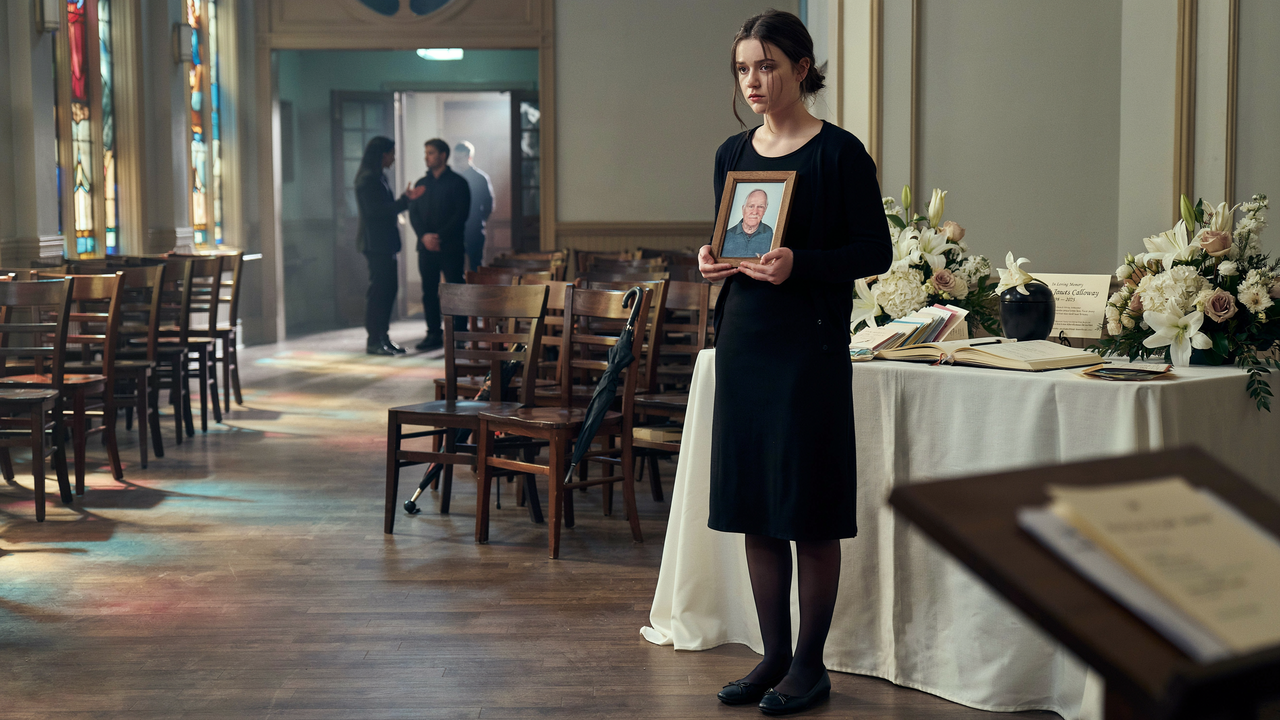
Kenneth read aloud, his voice low.
“My dearest Kirsten, if this reaches you, then Connor has finally run out of ways to hide what we agreed to protect…”
He stopped.
Melinda covered her mouth.
Connor’s smile widened by the smallest degree.
I stared at the photograph on my desk.
At my mother.
At my ex-husband.
At the pregnant stranger.
And then I noticed something in the woman’s hand.
A hospital bracelet.
My hospital’s logo was printed across it.
Beneath the logo, in small black letters, was a name.
A name I knew.
A name that belonged to a patient I had treated only that morning.
PART 3.
For a moment, I forgot how to breathe.
The office walls seemed to move farther away, the sound of the hospital corridor softening until all I could hear was Elliot’s slow breathing against my shoulder and the quiet rustle of the letter in Kenneth Boyd’s hand.
The photograph lay on my desk like a piece of evidence pulled from another lifetime.
My mother outside Northgate Fertility Center.
Connor standing beside her.
A pregnant woman I did not recognize.
And on that woman’s wrist, the hospital bracelet bearing the name of a patient I had treated that very morning.
Lydia Hart.
The name came back to me with startling clarity.
Room 412.
Mild dehydration.
Twenty-nine weeks pregnant.
No family listed on her intake form.
Soft-spoken.
Watchful.
Exhausted in the way people looked when they had spent too long carrying more than anyone could see.
I had spent nearly twenty minutes with her before rounds, reviewing her chart and adjusting her fluids.
She had thanked me twice.
Once when I entered the room, and once when I left.
Her gratitude had felt too careful, like a habit learned from needing not to inconvenience anyone.
Now her name stared up from an old photograph on my desk.
A photograph taken three years ago.
Three months before my mother died.
“Kirsten?” Kenneth said.
His voice pulled me back into the office.
I looked up.
Melinda was staring at the photograph with both hands pressed over her mouth.
Connor stood near the door, too still, too watchful.
The satisfaction from a moment earlier had begun to crack around the edges, as if he had revealed something he had expected to control, only to realize it had grown beyond him.
“Lydia Hart is upstairs,” I said.
Kenneth’s brows drew together.
“Here?”
“In this hospital.
She’s my patient.”
Melinda whispered, “That can’t be a coincidence.”
“No,” I said.
“It can’t.”
Connor laughed under his breath, but it carried no humor.
“You’re all building castles out of shadows.”
I turned to him.
“Then explain the photograph.”
He crossed his arms.
“Ask your mother.”
“My mother is dead.”
“Then I guess that makes answers difficult.”
The cruelty in that sentence was quiet, almost lazy.
A year ago, it would have sliced through me.
Today, it revealed him.
Not as powerful.
Not as untouchable.
Just small enough to hide behind a dead woman’s silence.
Elliot shifted in my arms, his little hand opening against my lab coat.
I looked down at him and forced my voice to stay gentle.
“Kenneth, finish the letter.”
Kenneth hesitated.
“Kirsten, I think you should sit down.”
“If I sit down, I may not get back up.”
He studied my face and must have seen that I meant it.
Then he lowered his gaze to the page again.
“My dearest Kirsten,” he read, “if this reaches you, then Connor has finally run out of ways to hide what we agreed to protect.
I am writing this with a hand that shakes and a heart full of fear, but also with hope that one day you will understand the choice I made.”
My throat tightened.
My mother’s voice seemed to rise out of the paper.
Not the weakened voice from her final months, but the one I remembered from childhood.
Warm.
Steady.
Always trying to make the frightening world feel manageable.
Kenneth continued.
“You were not meant to be left in the dark forever.
I told myself I was waiting for the safest moment.
I told myself that love sometimes requires silence.
But silence has become its own kind of harm, and I do not want to leave this world with the truth buried so deeply that you mistake it for betrayal.”
Melinda began crying silently again.
Connor looked toward the window.
“I have made arrangements,” Kenneth read, “for records to be preserved outside Northgate.
If anything happens to me before I can tell you myself, there are people who know enough to help you find the rest.”
Kenneth paused.
My heart pounded.
“The rest of what?” I asked.
He read on.
“You were never alone in wanting a child, my darling.
And you were never the failure you believed yourself to be.”
The words struck me in a place I had kept guarded for years.
I closed my eyes.
How many nights had I sat on the bathroom floor with another negative test in my hand? How many times had I apologized to Connor for something my body could not do? How many times had my mother held me and said, “You are more than this grief,” while keeping a secret that might have changed everything?
When I opened my eyes, the room had blurred.
Kenneth’s voice softened.
“I need you to find Lydia.
She did not come into our lives by accident.
She carries more than one story, and one of them belongs to you.”
The office went utterly quiet.
Kenneth stopped reading.
“Is that the end?” I asked.
“No.”
He looked troubled now.
“Keep going.”
He took a careful breath.
“Do not trust Connor with the whole truth.
He knows pieces, and he believes pieces can make him powerful.
But he does not know what I hid from him, and he does not know what Lydia chose.
There is one more child, Kirsten.
And if I am gone before you learn where that child is, begin with the blue room.”
My hand tightened around Elliot.
“The blue room?” Melinda whispered.
I stared at the letter.
“What blue room?”
Kenneth turned the page over, but there was nothing else.
“That’s where it ends.”
Connor’s expression had changed again.
The color had drained from his face.
For the first time, he looked genuinely afraid.
Not angry.
Not cornered.
Afraid.
And that frightened me more than anything he had done before.
“What is the blue room?” I asked him.
He shook his head.
“I have no idea.”
“You’re lying.”
“You always think you know everything.”
“No,” I said quietly.
“But I know you.”
His jaw tightened.
Melinda looked at him.
“Connor, what is she talking about?”
“Nothing.”
“It doesn’t sound like nothing.”
He turned on her.
“You need to stop talking as if you’re part of this.”
Her face flinched, but she did not fold into herself this time.
Instead, she stepped closer to me.
Not beside Connor.
Not behind him.
Closer to me.
“I am part of this,” she said.
“Elliot is part of this.”
Connor’s eyes flashed.
“Elliot is my son.”
“He is a child,” Melinda said, voice trembling but clear.
“Not property.”
Those words settled over the room with quiet force.
I looked at her, really looked at her, and saw something I had missed beneath the betrayal and the fear.
Melinda was not asking to be forgiven.
She was trying, perhaps for the first time, to stand in the truth without letting Connor define it for her.
That did not erase what she had done.
But it mattered.
Kenneth folded the letter and placed it carefully back on the desk beside the photograph.
“Kirsten,” he said, “we need to locate Lydia Hart.”
“She’s in obstetrics observation.”
“Can we speak with her?”
I shook my head automatically.
“Not as lawyers.
Not without consent.
She’s my patient.”
“I understand.”
“I also can’t drag this into her room based on a photograph and a letter.”
Kenneth nodded.
“Then we proceed carefully.”
Connor moved toward the door.
“This conversation is over.”
Kenneth stepped slightly into his path.
“Mr. Fleming, I recommend you remain available.”
“You recommend a lot.”
“I also document everything.”
Connor’s mouth tightened.
I walked to Melinda and gently placed Elliot back into her arms.
The transfer felt impossibly difficult.
His small warmth left a hollow place against my chest.
Melinda looked at me.
“Kirsten…”
“Take him home,” I said.
Her eyes widened.
“What?”
“Not with him.”
Connor’s head snapped toward me.
I held his gaze.
“Not until you speak with your own attorney.
Not until you know exactly what legal rights and responsibilities you have.
And not until someone neutral helps determine what is safest for Elliot.”
Melinda hugged the baby closer.
“I don’t know where to go.”
That admission was so quiet I almost missed it.
Connor heard it too.
His expression hardened.
“Don’t be ridiculous.”
Melinda did not look at him.
“I don’t know where to go,” she said again.
There were many things I could not give her in that moment.
Not trust.
Not absolution.
Not the friendship we had destroyed between us.
But I knew what it felt like to stand in a room and realize the life you had been living was not safe to believe in anymore.
I reached for my phone and sent one message to Anika.
Need your office for a mother and child.
Privacy.
Please.
The response came almost instantly.
Of course.
I looked at Melinda.
“Dr. Rao has an office two doors down.
Sit there.
Call someone you trust.”
Melinda gave a small, broken laugh.
“I don’t know who that is anymore.”
I did not know what to say to that.
Kenneth did.
“Call a family law attorney,” he said.
“Not mine.
Not Connor’s.
Your own.
Today.”
Melinda nodded.
Connor looked between us, his control slipping by degrees.
“This is insane.
You’re all acting like I’m dangerous.”
No one answered.
That was answer enough.
The office door opened after a soft knock, and Anika appeared.
She took in the scene in one glance—Elliot in Melinda’s arms, Connor near the door, Kenneth beside my desk, and me standing in the center of the office with my mother’s letter open behind me.
Her eyes settled on my face.
“What do you need?” she asked.
“Can Melinda sit in your office for a little while?”
Anika did not ask who Melinda was.
She did not ask why.
She simply nodded.
“Of course.”
Melinda looked at me as if she wanted to say something.
An apology.
An explanation.
A thank you.
Maybe all three.
Instead, she whispered, “His favorite song is You Are My Sunshine.”
I did not understand why she was telling me until she looked down at Elliot.
“He calms down when he hears it.”
Then she followed Anika out of the office.
Connor tried to follow.
Kenneth blocked him with one step.
“Give her a moment,” Kenneth said.
Connor stared at him.
“You’re making a mistake.”
“No,” I said.
“I think we’ve all spent enough time letting you decide what everyone else is allowed to know.”
He turned toward me slowly.
There it was again—that old look.
The one that used to make me question whether I had been too harsh, too emotional, too unforgiving.
The look that suggested he was the only reasonable person in the room.
But the spell had broken.
“You want the truth?” he asked.
“Yes.”
“You can’t handle it.”
I almost smiled.
“Connor, I’m a pediatrician.
I’ve sat with parents through diagnoses, accidents, recoveries, losses, miracles, and the kind of uncertainty that changes people forever.
Don’t confuse my pain with weakness.”
His expression shifted.
For a second, I saw something like memory cross his face.
There had been good moments once.
I hated that there had.
It would have been easier if the man before me had always been a stranger.
But he had made me tea when my mother first got sick.
He had held my hand during procedures.
He had painted the spare bedroom yellow after our second fertility cycle because he said hope deserved a color.
Maybe he had loved me once.
Maybe he had loved what I represented.
Maybe those were not the same thing.
“Kirsten,” he said, quieter now, “your mother made choices too.”
“I know.”
“No, you don’t.”
“Then tell me.”
He looked at the letter on the desk.
“She wanted a grandchild.”
My chest tightened.
“So badly that she helped you forge my signature?”
His eyes darted.
“I never said that.”
“You didn’t have to.”
“You think everything happened because of me.”
“Did it?”
He fell silent.
Kenneth said, “Mr. Fleming, this is a very good time to stop speaking.”
But Connor was no longer performing for Kenneth.
He was looking at me, and for the first time, his face held something unstable.
Not remorse exactly.
Not guilt.
Something closer to resentment mixed with grief.
“Your mother was dying,” he said.
“She wanted to fix things before she left.”
“Fix things?”
“She saw what infertility was doing to you.”
“She saw what you were doing to me.”
His lips parted, then closed.
I stepped closer to the desk, resting one hand on the edge.
“What did she know about Lydia?”
Connor’s eyes lowered.
“Connor.”
He looked back up.
“She knew Lydia needed help.”
“What kind of help?”
He swallowed.
“A place to stay.
Medical care.
Money.”
A terrible understanding began forming at the edges of my mind.
“And in exchange?”
He shook his head.
“No.
It wasn’t like that.”
“What was it like?”
“It was supposed to be simple.”
Those words filled me with dread.
Kenneth’s voice was low.
“What was supposed to be simple?”
Connor ran a hand through his hair.
“Lydia agreed to be a surrogate.”
The office tilted again.
I held myself steady against the desk.
“For whom?” I asked.
He did not answer.
“For whom, Connor?”
He looked at me.
“For you.”
The words landed softly.
Too softly for what they meant.
I stared at him.
“I never agreed to a surrogate.”
“I know.”
“My mother did?”
“She thought once there was a baby, once it was real, you’d understand.”
The pain that moved through me then was not sharp.
It was deep and slow, like ice cracking over dark water.
My mother.
My careful, loving, complicated mother.
Had she truly believed that? Had desperation twisted her judgment? Had illness made time feel so short that consent became a detail she thought love could repair later?
Or was Connor giving me just enough truth to make someone else carry part of his blame?
I looked at the letter again.
Do not trust Connor with the whole truth.
“What happened to the pregnancy?” I asked.
Connor’s face closed.
Kenneth leaned forward slightly.
“Mr. Fleming.”
Connor shook his head.
“No.”
“Was Lydia pregnant in that photograph?” I asked.
“Yes.”
“With my embryo?”
His silence was an answer.
My hand rose to my mouth.
One more child.
My mother’s letter had said there was one more child.
Somewhere.
A child connected to me, hidden behind a blue room, a failed clinic, and a woman now lying upstairs in my hospital.
I had imagined becoming a mother so many times that the longing had become its own kind of ache.
But I had never imagined learning motherhood might already exist somewhere beyond my knowledge.
Not through a crib I had prepared.
Not through a birth I had witnessed.
Not through a choice I had made.
Through secreTS.
Through signatures.
Through people who decided love gave them permission to rearrange my life.
“I need to see Lydia’s chart,” I said.
Kenneth shook his head gently.
“Kirsten, be careful.”
“I’m not going to violate her privacy.
I’m her physician today.
I need to know whether she’s medically stable.”
“That’s different.”
Connor’s laugh was bitter.
“Now you care about rules?”
I looked at him.
“Rules are what protect people from men like you.”
He flinched.
It was small, but it was real.
I picked up the photograph and letter, slid both into a clean folder, and placed them inside my locked desk drawer.
Then I removed my lab coat and hung it on the hook behind the door.
The gesture steadied me.
Doctor first.
Then everything else.
“I’m going upstairs,” I said.
Kenneth nodded.
“I’ll stay nearby.”
Connor moved toward the door again.
“No,” Kenneth said.
Connor turned.
“You can’t stop me.”
“I’m not stopping you.
I’m telling you that walking into Lydia Hart’s room before Kirsten speaks with her physician team would create more problems for you.”
Connor’s face tightened.
“Fine,” he said.
But I knew that tone.
He was not agreeing.
He was waiting.
I stepped into the hallway.
The hospital air felt cooler than before, bright with the scent of disinfectant and coffee from the nurses’ station.
Life moved around me with ordinary urgency.
A resident reviewed notes by the wall.
A little girl in purple socks rode past in a wheelchair, grinning as her father pushed too fast and her mother whispered for him to slow down.
Normal life.
Impossible life.
Anika was outside her office, arms crossed.
Through the frosted glass, I could see Melinda sitting with Elliot, rocking him slowly.
“Are you all right?” Anika asked.
“No.”
She nodded.
“That is a reasonable answer.”
It almost made me laugh.
Almost.
“I need to check on a patient in obstetrics observation.
Lydia Hart.”
Anika’s expression changed.
Not dramatically.
Just enough.
“You know her?”
“I saw her this morning.”
Anika hesitated.
“Kirsten…”
“What?”
“She asked about you after you left.”
My skin prickled.
“What did she ask?”
“Whether you always worked on Thursdays.”
The hallway seemed to narrow.
“Why didn’t you tell me?”
“At the time, it sounded like small talk.”
“Did she say anything else?”
Anika looked toward her office, then back to me.
“She asked if your mother’s name was Evelyn.”
The name struck like a bell.
Evelyn Sinclair.
My mother.
I gripped the edge of the counter.
Anika reached for my arm.
“Kirsten.”
“I’m okay.”
“You keep saying that.”
“I know.”
This time, we both knew it was not true.
I took the elevator to the fourth floor with Kenneth beside me.
Neither of us spoke.
The numbers above the door lit one by one, each soft chime counting down the distance between my life as I had understood it and whatever waited in Room 412.
When the doors opened, the obstetrics unit felt calmer than pediatrics.
Softer lighting.
Quieter voices.
The distant lull of a fetal monitor.
A nurse at the desk looked up and smiled.
“Dr. Sinclair.
Lydia Hart’s vitals improved after the second bag of fluids.”
“Good.
Has she had any visitors?”
The nurse shook her head.
“No.
She asked for paper and an envelope, though.”
My heart beat faster.
“Did she say why?”
“She said she needed to write something down while she still had the courage.”
Kenneth looked at me.
I walked to Room 412.
The door was half-open.
Inside, Lydia Hart sat propped against pillows, one hand resting protectively over her abdomen.
Her dark hair was tied loosely at the back of her neck.
She looked younger than she had that morning and older at the same time, as if fear had taken years from one part of her and added them to another.
A folded piece of hospital stationery lay on the table beside her.
She looked up when I knocked.
Her face changed the moment she saw me.
Not surprise.
Recognition.
“I wondered how long it would take,” she said softly.
I stepped inside, leaving the door open.
Kenneth remained outside, visible but not intrusive.
“How long what would take?” I asked.
Lydia’s gaze drifted to the hallway behind me.
“Before Connor got careless.”
The name in her mouth confirmed everything and nothing at once.
I pulled the visitor chair closer but did not sit yet.
“Lydia, I’m here as your doctor first.
Are you in pain?”
She shook her head.
“No.
Just tired.”
“Dizzy?”
“Less than before.”
“Any contractions?”
“No.”
I glanced at the monitor, at the steady reassurance of numbers and rhythm.
Only then did I sit.
Her eyes filled with tears.
“You look so much like Evelyn,” she whispered.
My throat tightened.
“You knew my mother.”
Lydia smiled faintly, but it was full of sadness.
“She brought me soup every Tuesday for almost two monThS.”
That detail undid me more than anything else could have.
My mother had made soup when she did not know how else to love someone.
Chicken with rice when I was sick.
Tomato basil when I passed my boards.
Lentil when she worried but didn’t want to say why.
“She never told me about you,” I said.
“I asked her not to at first.”
“Why?”
“Because I was ashamed.”
“Of what?”
Lydia looked down at her hands.
They were thin, restless, twisting the edge of the blanket.
“I was twenty-six,” she said.
“I had aged out of every safety net I thought would catch me.
I was working two jobs, sleeping in my car some nights, and trying not to admit how scared I was.
Connor found me through someone at Northgate.”
“Found you?”
“He said he and his wife needed help having a baby.
He said you were too proud to ask.
He said your mother knew.”
I closed my eyes briefly.
Too proud to ask.
Even in his lies, Connor had known how to make my independence sound like a flaw.
“Did you meet my mother before you agreed?”
“No.” Lydia’s tears spilled over.
“I met her after.
When she found out how Connor had arranged it, she was furious.”
I went still.
“Furious?”
Lydia nodded.
“At him.
At herself.
At the clinic.
She said she had let grief and illness make her careless.
She kept saying, ‘Kirsten must choose her own life.’”
The pressure in my chest loosened just enough for breath.
My mother had made mistakes.
But maybe she had tried to undo them.
“What happened?” I asked.
Lydia looked toward the window.
Late afternoon light spilled across the floor in pale gold.
“I was pregnant,” she said.
“At first, your mother thought the only choice was to tell you immediately.
But Connor said if she did, the stress would destroy your marriage.
He said you had already lost too much.
He made everything sound like protection.”
I let out a bitter breath.
“He’s good at that.”
“Yes,” Lydia whispered.
“He is.”
“Where is the child?”
Lydia’s hand tightened on the blanket.
“Kirsten…”
My pulse climbed.
“My mother’s letter said there was one more child.”
Lydia looked at me then, and the sorrow in her eyes frightened me.
“There is.”
The room seemed to fall silent around those two words.
I gripped the arms of the chair.
“A girl,” Lydia said.
“Her name is Nora.”
Nora.
The name opened inside me like a door.
A girl.
Somewhere in the world, there was a girl named Nora.
I looked down at my hands.
I had delivered difficult news to parenTS. I had celebrated recoveries.
I had held tiny fingers while children slept through fevers.
I had loved my patients with the safe, professional tenderness that came from giving care without claiming ownership.
But this was different.
This was a child who might share my biology.
A child I had never held.
A child whose existence had been wrapped in secrets before she was even born.
“How old?” I asked.
“Almost two.”
The math aligned with the missing embryo.
My voice trembled.
“Where is she?”
Lydia closed her eyes.
“That’s the part I don’t know anymore.”
The fragile hope that had begun to rise inside me faltered.
“What do you mean you don’t know?”
“She was placed with a family.”
“Placed?”
“Not legally adopted at first.
Not exactly.
Everything was supposed to be temporary while Evelyn figured out how to tell you and protect you at the same time.
But then she got sicker.
Connor started pressuring everyone.
Northgate began hiding records.
And the family disappeared from the arrangement.”
I stood because sitting had become impossible.
“What family?”
Lydia reached for the hospital stationery beside her.
“I wrote down what I remember.”
I did not take it yet.
“Lydia, why are you here now?”
She looked down at her abdomen, and her face softened with fear and love.
“Because I’m pregnant again.”
“I know.”
“And because two weeks ago, I received a letter with no return address.”
She opened the drawer beside her bed and pulled out a small envelope.
Her hands shook as she held it out.
This time, I took it.
Inside was a photograph.
A little girl with honey-colored curls stood in a blue room, one hand pressed against a painted wall.
She wore yellow overalls and looked over her shoulder at whoever had taken the picture.
Her eyes were bright blue.
Elliot’s eyes.
My eyes.
On the back of the photograph, five words had been written in black ink.
She is asking for Kirsten.
My knees nearly gave out.
Lydia began to cry.
“I didn’t know what to do,” she said.
“I came here because I remembered Evelyn talking about you.
She said if anything ever went wrong, I should find the daughter who became a doctor because she couldn’t bear seeing children hurt.”
I stared at the little girl in the photograph.
Nora.
The blue room.
A child asking for me.
Kenneth appeared quietly in the doorway.
He must have seen my face because he did not ask permission before stepping inside.
“What is it?”
I handed him the photograph.
He looked at it, then at the writing on the back.
His expression hardened with focus.
“Lydia,” he said gently, “do you know who sent this?”
She shook her head.
“No.”
“Do you know where the photograph was taken?”
“No.
But I know the wallpaper.”
I looked up.
“What?”
Lydia pointed to the blue wall behind the child.
Tiny white birds were painted near the window frame.
“Evelyn painted those birds herself.”
The room blurred.
“My mother?”
Lydia nodded.
“She said every child deserved a window, even if the room was small.”
My mother’s voice moved through me again, suddenly alive and aching.
Every child deserved a window.
I pressed the photograph to my chest.
For the first time since Kenneth stepped off the elevator, the chaos inside me shifted into something clearer.
Not peace.
Not certainty.
Purpose.
Whatever had happened, whatever choices had been made around me and without me, there was a child somewhere whose life was tied to mine.
And I would not let her remain a mystery buried in someone else’s fear.
Lydia wiped her face.
“There’s something else.”
Kenneth and I both looked at her.
She placed one hand over her abdomen.
“This baby,” she said slowly, “is not connected to Connor.”
I frowned.
“Why would I think—”
“Because he thinks it is.”
A chill moved through the room.
Lydia swallowed.
“He came to see me three days ago.
He said he knew I was back in town.
He said if I told you about Nora, he would make sure no one believed me.”
Kenneth’s expression darkened.
“Did he threaten you?”
She shook her head quickly.
“Not directly.
He never says things directly.”
No, I thought.
He rarely did.
“But he said something strange,” Lydia continued.
“He said Nora was safer where she was.
He said your mother had hidden her too well.”
Kenneth looked at the photograph again.
“Hidden from whom?”
Lydia’s eyes lifted to mine.
“That’s what I don’t understand.
At first, I thought Evelyn was hiding Nora from Connor.”
I held my breath.
“But after what he said, I think she may have been hiding Nora from someone else.”
The fetal monitor pulsed steadily in the background.
A quiet rhythm of life in a room full of unfinished stories.
I looked at the photograph again—the blue wall, the painted birds, the little girl with my eyes.
Then I noticed something I had missed before.
In the corner of the image, half-hidden behind a curtain, was a small wooden sign hanging on the wall.
Only part of the name was visible.
House.
Not a home address.
Not a nursery label.
A place name.
I brought the photograph closer.
Beneath the painted birds, in faded white letters, I could just make out the first word.
Sinclair House.
My family name.
I stared at it, my heartbeat roaring in my ears.
Because Sinclair House was not just a name.
It was a property.
An old lakeside home my mother had inherited from her sister and supposedly sold before she died to pay medical bills.
Except if Nora’s photograph had been taken there…
Then my mother had not sold it.
She had hidden it.
And somewhere inside that blue room, a little girl was waiting for the truth to find her.