
PART 2: THE EMERGENCY UPLOAD
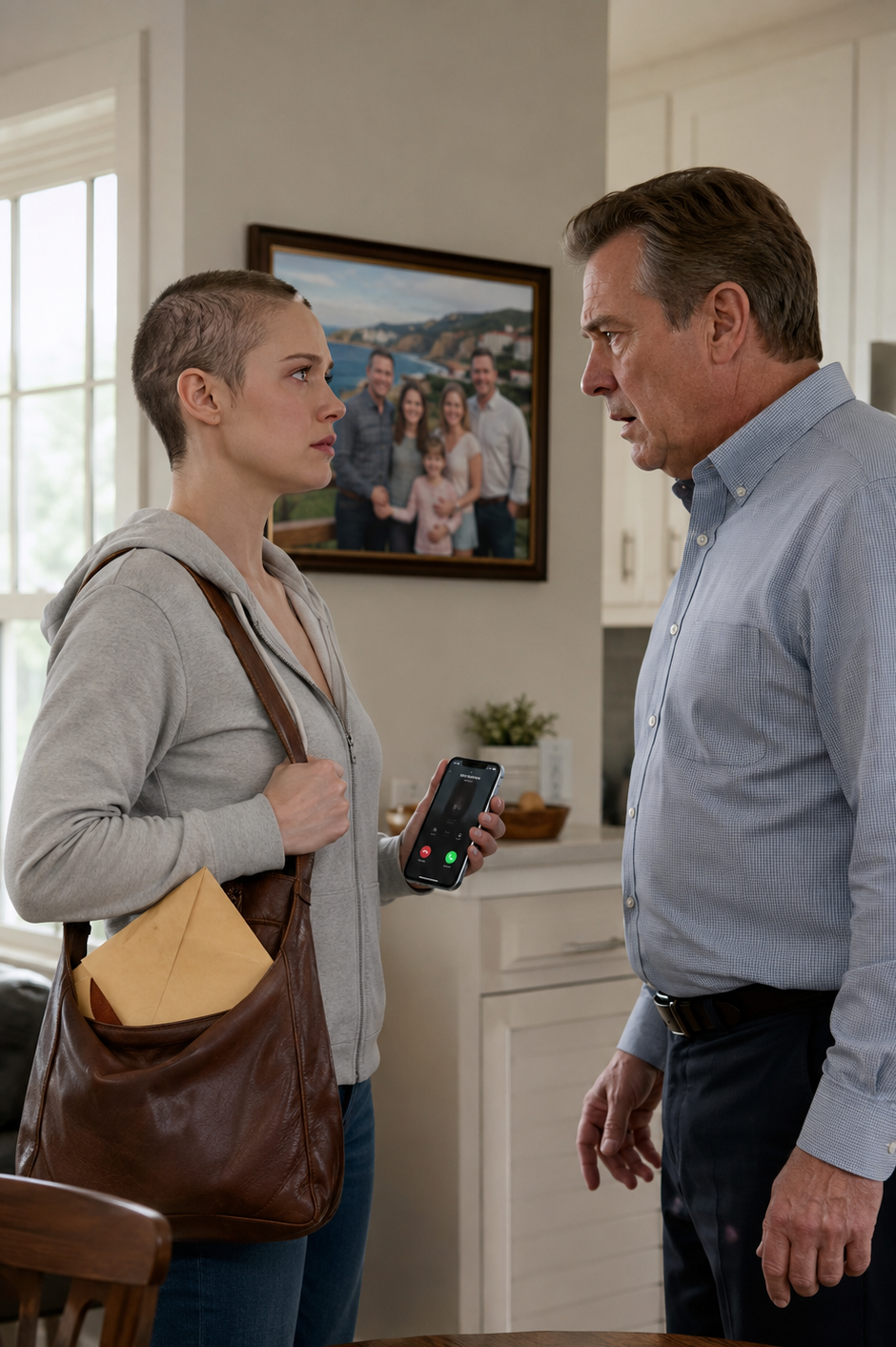
My father moved toward me during the argument, and the situation became unsafe.
For one frightening second, the whole kitchen seemed to tilt, and I saw Julian’s face clearly.
He was smiling.
Not big.
Not obvious.
Just enough.
Dad stepped close.
“You selfish little parasite.”
I tried to move away, but chemotherapy had left me weak.
I struggled to speak.
“Dad,” Julian said lazily, “careful.
We still need her to authorize it.”
That sentence gave me an opening.
Dad stepped back just enough for me to reach the floor safely.
My mother rushed over, but she did not ask whether I was okay.
She reached for my bag.
Her mask finally fell.
“Give it to me, Vivian.”
I looked up at her.
“You planned this.”
Her mouth twitched.
Julian stepped closer.
“No one planned anything.
You just forced us.”
I scanned the room and laughed then, though it hurt.
That laugh made them uneasy.
Dad wiped his hands on his jeans.
“You have until tonight.
Transfer the money, or I call the hospital and tell them you’re mentally unstable.
You think they’ll operate on a woman who’s confused, hysterical, and broke?”
There it was.
The real plan.
They weren’t just trying to take my money.
They were preparing to undermine my credibility if I resisted.
I slowly pulled my phone from my hoodie pocket.
The screen was cracked, but it was still alive.
The red recording bar glowed like a tiny heartbeat.
Julian saw it first.
His smile vanished.
“What is that?” he whispered.
I pressed one button.
The audio file uploaded.
Mom’s face drained.
“Vivian…”
Part 3: The police arrived six minutes later
The police arrived six minutes later.
Dad tried to perform his favorite role: respectable father, concerned protector, misunderstood man.
“She’s sick,” he told the officers.
“Medication makes her unstable.”
I sat at the table, shaken.
“Play the recording.”
Chloe had already sent it to the responding officers.
Dad’s own voice filled the room: “Your brother needs that money more than you need your life.” The recording also captured the confrontation and my call for help.
The younger officer’s expression hardened.
Mom began crying, but it was not grief.
It was calculation failing in real time.
Julian tried to slip toward the back door.
An officer stopped him.
“Stay where you are.”
That was when Chloe delivered the second blow.
She arrived in person wearing a navy suit and carrying a folder thicker than my medical chart.
“Vivian’s brother is also named in a pending fraud complaint,” she said.
“We have bank records showing he attempted to open credit lines using her information.”
Julian shouted, “That’s not true!”
I looked at him.
“You used my Social Security number the week after my diagnosis.”
His silence confessed before his mouth could lie.
Chloe placed another document on the table.
“Vivian changed her medical proxy, emergency contacts, and estate documents last month.
None of you have authority over her care, money, apartment, or body.”
Mom stared at me as if I had slapped her.
“You cut us out?”
“No,” I said.
“You did that when you priced my life at sixty-five thousand dollars.”
Dad was escorted out first.
His face twisted with disbelief, like consequences were something that happened to poorer men on television.
“This is your fault,” he barked as they led him toward the door.
I met his eyes.
“No.
This is evidence.”
Julian faced legal action two days later after investigators connected him to identity theft, forged loan applications, and illegal betting debTS. The men he owed money to disappeared the moment police started asking questions.
Cowards recognize a sinking ship.
Mom was not charged that day, but she lost the house.
Dad’s legal bills ate their savings.
Julian’s creditors came for everything he had hidden under her name.
When she called me from a motel three months later, sobbing that family should forgive, I listened for exactly ten seconds.
Then I said, “I learned from you.
Survival comes first.” I hung up.
Six months later, I woke in a sunlit recovery room with clean sheets, steady machines, and Chloe asleep in a chair beside the window.
The surgery had worked.
The scans were better than expected.
My body was scarred, tired, and alive.
I moved into a small apartment above a bakery, where every morning smelled like butter and second chances.
I used the settlement from the civil case to pay my medical bills, start a patient advocacy fund, and buy a lockbox for the Disney photo.
I kept it not because I missed them.
I kept it to remember the girl who once believed cruelty was love.
One year later, I stood on a hospital stage, hair growing back in soft dark curls, speaking to patients about medical rights and financial protection.
My voice was still slightly rough from that night’s confrontation.
But it did not shake.
After the speech, a young woman hugged me and whispered, “You made me feel less afraid.”
That was the real outcome.
Not the legal proceedings.
Not the ruined reputations.
Not the court orders keeping them away.
The real outcome was this: they wanted my life reduced to a debt payment, a signature, a silence.
Instead, I lived.
And I made my life impossible for them to erase.